
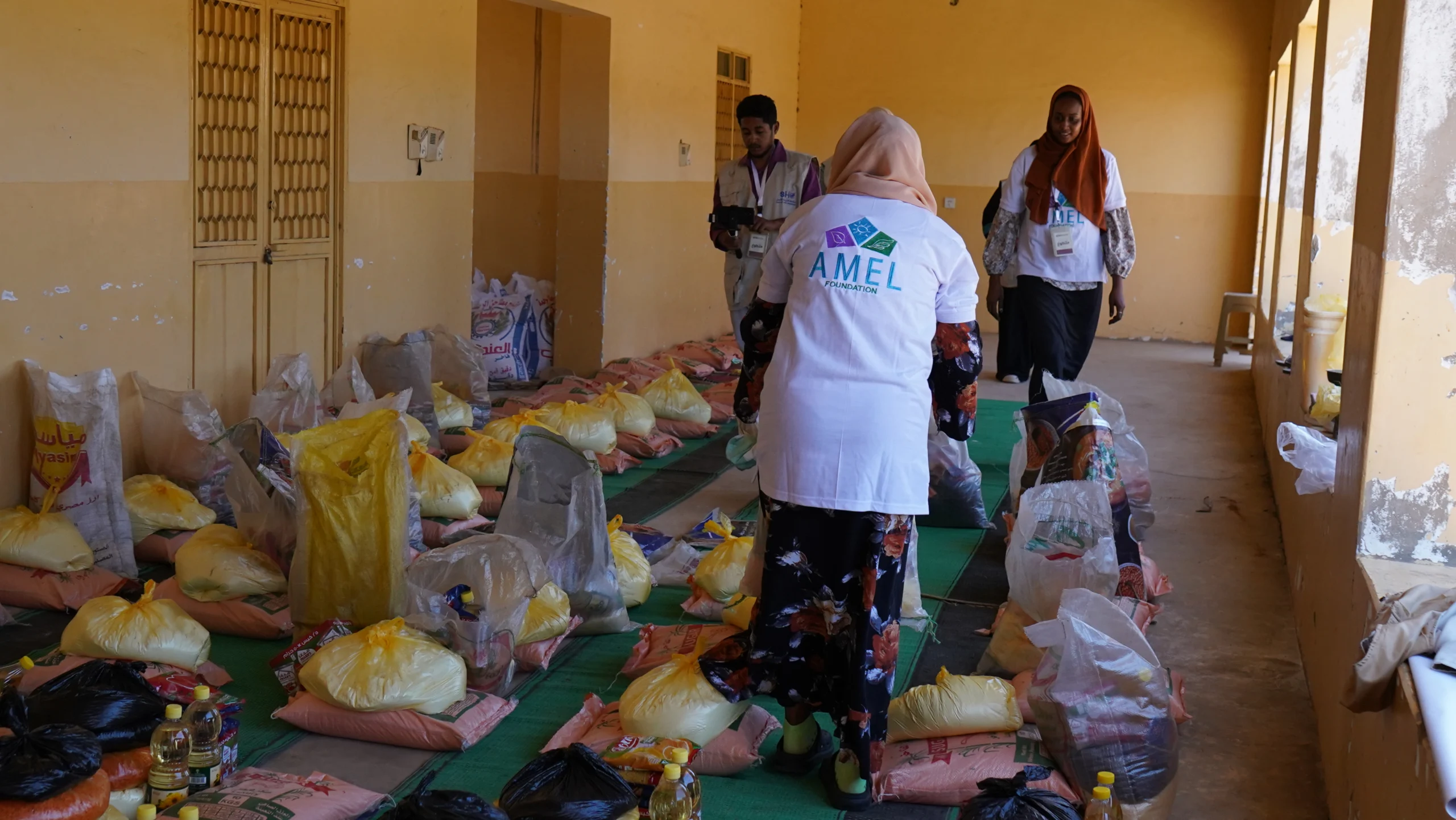
As Ramadan draws to a close, many Muslims ask an important question: when can I pay Zakat al Fitr? This question is not only about fulfilling a religious duty. It is about timing. It is about making sure that families facing hunger can celebrate Eid with dignity.
At a time when Sudan is experiencing one of the world’s most severe humanitarian emergencies, understanding the correct Zakat al Fitr payment time has never been more urgent. More than 30 million people across Sudan now require humanitarian assistance, according to the United Nations Office for the Coordination of Humanitarian Affairs (OCHA). For many displaced families, Zakat al Fitr is not symbolic support. It is their only meal on Eid.
This guide explains when to give Zakat al Fitr, why timing matters, and how your contribution through the AMEL Foundation Zakatul Fitr program can directly reach families in need.
Understanding Zakat al Fitr
Zakat al Fitr is a mandatory charity given at the end of Ramadan. Unlike annual Zakat, it is required from every Muslim who has enough food for themselves and their dependents for one day and night. It purifies the fast and ensures that even the poorest families can celebrate Eid without hunger.
The rules of Zakat al Fitr are rooted in prophetic tradition. It must be given before the Eid prayer, and it is usually equivalent to a set amount of staple food. Today, most scholars allow it to be given in monetary value so organizations can distribute food efficiently.
In humanitarian settings like Sudan, this small act becomes a powerful lifeline. With over 24 million people facing acute food insecurity, as highlighted by humanitarian assessments, Islamic charity during Ramadan becomes a critical intervention.
When Is the Zakat al Fitr Payment Time?
The Zakat al Fitr payment time begins at sunset on the last day of Ramadan. It becomes obligatory at that moment. However, scholars agree that it can be paid earlier during Ramadan to ensure it reaches those in need on time.
The most important deadline is clear: it must be given before the Eid prayer. If it is paid after the prayer, it is considered voluntary charity and does not fulfill the obligation.
This Zakat al Fitr deadline before Eid is especially important in crisis zones. In conflict-affected areas, distribution can be delayed by insecurity or blocked roads. Early payment allows humanitarian teams to prepare food parcels in advance.
Why Early Payment Matters in Sudan
Sudan’s crisis has created the world’s largest displacement emergency. According to the World Health Organization, health systems are operating at less than 20 percent capacity in many regions. At the same time, famine conditions threaten parts of Darfur and Kordofan.
When donors ask when to give Zakat al Fitr, humanitarian experts strongly encourage early payment. Paying during the last ten days of Ramadan ensures that food reaches families before Eid morning.
In overcrowded displacement camps, mothers often struggle to secure even basic grains. A timely Zakat contribution can provide millet, oil, and dates so children do not wake up hungry on Eid day.
Who Must Pay Zakat al Fitr?
Understanding who must pay Zakat al Fitr helps clarify its collective impact. Every Muslim adult who has sufficient means must give on behalf of themselves and their dependents, including children.
The amount is modest. It is calculated based on the cost of staple food in the region where the donor lives. Those wondering how to calculate Zakat al Fitr can check local mosque guidance or verified humanitarian platforms.
When millions fulfill this obligation together, the scale becomes transformative. For displaced communities in Sudan, this collective action bridges funding gaps that formal aid systems struggle to fill.
Eligible Recipients of Zakat al Fitr
Islamic guidance clearly defines the eligible recipients of Zakat al Fitr. It is meant for the poor and the needy. In Sudan today, millions fall into these categories.
Families displaced by fighting, refugees who crossed borders with nothing, widows caring for children alone, and elderly people without support are all eligible under Islamic law. These groups align with international humanitarian definitions of vulnerability.
According to ReliefWeb humanitarian reports, food access in some regions has collapsed due to conflict and inflation. Directing Zakat to these families fulfills both religious obligation and humanitarian necessity.
The Best Time to Distribute Zakat al Fitr
The best time to distribute Zakat al Fitr is one to two days before Eid. This allows families to purchase or receive food in time for celebration.
Humanitarian organizations follow Ramadan charitable giving guidelines carefully. They plan procurement, transportation, and community distribution ahead of the Eid prayer. Early donor action makes this planning possible.
At AMEL Foundation, teams coordinate through local networks to identify the most vulnerable households. Through programs like Food Security initiatives, Zakat funds are converted into practical support that reaches families before the final call to prayer.
How Zakat al Fitr Supports Health and Water Access
Hunger is not the only threat facing Sudanese families. Disease outbreaks, including cholera, have spread in overcrowded camps. Clean water and hygiene supplies are urgently needed.
According to the UNICEF Sudan crisis update, millions of children lack access to safe water and sanitation. Zakat al Fitr funds, when managed through trusted organizations, can support emergency food, clean water distribution, and hygiene kits.
Through initiatives like Water projects and healthcare support, humanitarian teams ensure that Eid assistance strengthens both nutrition and health resilience. This integrated approach protects families beyond a single meal.
Challenges in Delivering Aid Before Eid
Conflict creates serious obstacles. Roadblocks, insecurity, and looting can delay delivery. In some areas, humanitarian access is restricted.
This is why timing is critical. When donors wait until the last moment, distributions may not reach families before Eid prayer. Early contributions allow local teams to navigate logistical challenges.
Humanitarian reports consistently warn that aid funding remains dangerously low compared to need. Timely Zakat becomes a bridge between spiritual duty and practical survival.
How AMEL Foundation Ensures Responsible Distribution
AMEL Foundation operates with local knowledge and accountability. Through its About Us page, donors can learn about its history and mission rooted in serving vulnerable communities.
During Ramadan, teams identify priority households, coordinate with community leaders, and distribute food parcels directly. Documentation and verification processes ensure that Zakat reaches those who qualify under Islamic guidelines.
This approach aligns religious principles with humanitarian standards. It transforms a personal act of worship into structured, measurable relief.
When Can I Pay Zakat al Fitr? The Clear Answer
The simple answer is this: Zakat al Fitr can be paid anytime during Ramadan, but it must reach eligible recipients before the Eid prayer. Paying earlier within Ramadan is highly recommended, especially in times of crisis.
For Sudan, where millions face hunger, early payment is not just preferred. It is lifesaving. It gives humanitarian teams the time needed to prepare food and reach remote communities.
As Eid approaches, families in displacement camps are not asking for luxury. They are hoping for enough food to share a simple meal with dignity. Timely Zakat al Fitr transforms that hope into reality.
Turning Faith Into Immediate Relief
Ramadan is a month of mercy. Zakat al Fitr ensures that mercy extends beyond personal reflection and reaches those enduring hardship.
Sudanese communities have shown extraordinary resilience. Despite displacement and loss, they continue to fast, pray, and hold onto faith. When donors ask when to give Zakat al Fitr, the humanitarian response is clear: give early, give responsibly, and give with awareness.
By fulfilling this obligation before the Eid prayer, donors help protect families from hunger, illness, and despair. In a time of conflict and famine, your timely Zakat is more than charity. It is a lifeline delivered at the exact moment it is needed most.

Comments are closed