
A Crisis That Demands the World’s Attention
Sudan is currently experiencing one of the most severe humanitarian crises in the world. Since the outbreak of conflict in April 2023, violence and instability have forced millions of families to leave their homes, creating the largest displacement emergency today.
According to international crisis tracking reports, more than 13 million people have been uprooted, while over 30 million now require urgent assistance. Entire communities face hunger, disease, and the collapse of basic services. Yet, within these acts of solidarity—doctors working in dire conditions and volunteers organizing food kitchens—lies a powerful new hope that recovery is possible.
Understanding the Scale of Sudan’s Humanitarian Emergency
Sudan’s crisis did not emerge overnight; years of instability weakened infrastructure long before the current war. The World Health Organization’s analysis of the crisis highlights how the conflict has decimated healthcare systems, leaving millions vulnerable to cholera, malaria, and malnutrition.
Hunger has reached critical levels, placing children at the greatest risk. Without the urgent humanitarian aid Sudan requires, the crisis will only deepen.
The Human Stories Behind the Numbers
Behind every statistic is a family seeking safety. Many flee to neighboring countries like Chad, Egypt, and South Sudan. According to the UNHCR situation appeal for Sudan, refugee numbers are growing rapidly, straining host communities.
The Critical Role of Humanitarian Aid
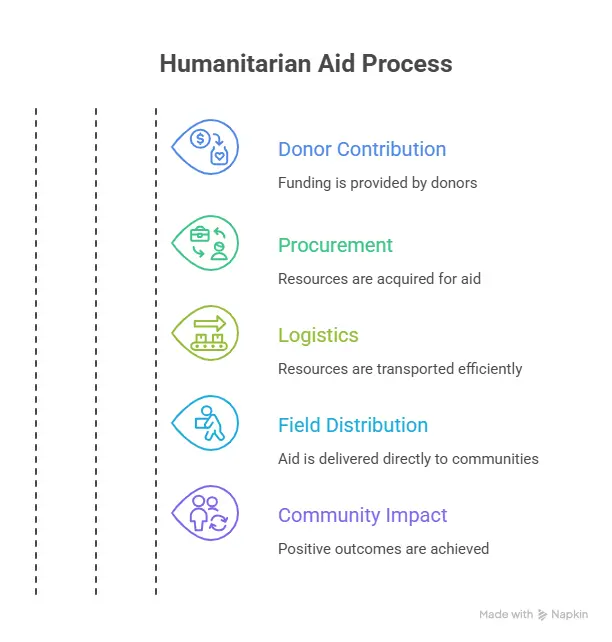
Delivering aid in a conflict zone is a monumental task involving blocked roads and disrupted communication. Despite this, teams continue to provide life-saving support through food distributions and mobile clinics.
Organizations like the AMEL Foundation’s food security initiatives focus on ensuring vulnerable communities receive consistent access to nutrition by strengthening supply chains and working with local volunteers.
Local Volunteers and Grassroots Relief
One of the most powerful forces in Sudan is the dedication of local volunteers. These grassroots networks bridge gaps that international programs cannot always reach immediately. Furthermore, an analysis of diaspora humanitarian engagement shows how Sudanese communities abroad are vital in funding and coordinating these local responses.
Rebuilding Communities Through Sustainable Support
Emergency aid saves lives today, but long-term community rebuilding in Sudan depends on restoring livelihoods and infrastructure. Humanitarian programs are shifting toward empowering communities to regain their independence.
Efforts like the AMEL Foundation’s training and development programs demonstrate how investing in skills and education can help families rebuild stable lives. By combining healthcare with food security, organizations create the foundation for lasting recovery.
The Role of Global Solidarity
Sudan’s crisis cannot be solved in isolation. International solidarity is essential to prevent further deterioration. Organizations like the AMEL Foundation work tirelessly to transform global compassion into practical support.
A New Hope for Sudan’s Future
Resilience is found in the families who support one another and the children returning to classrooms in tents. These acts remind us that Sudan’s future is shaped by determination and solidarity. With sustained support and global cooperation, the path toward recovery becomes clearer every day.

Comments are closed