
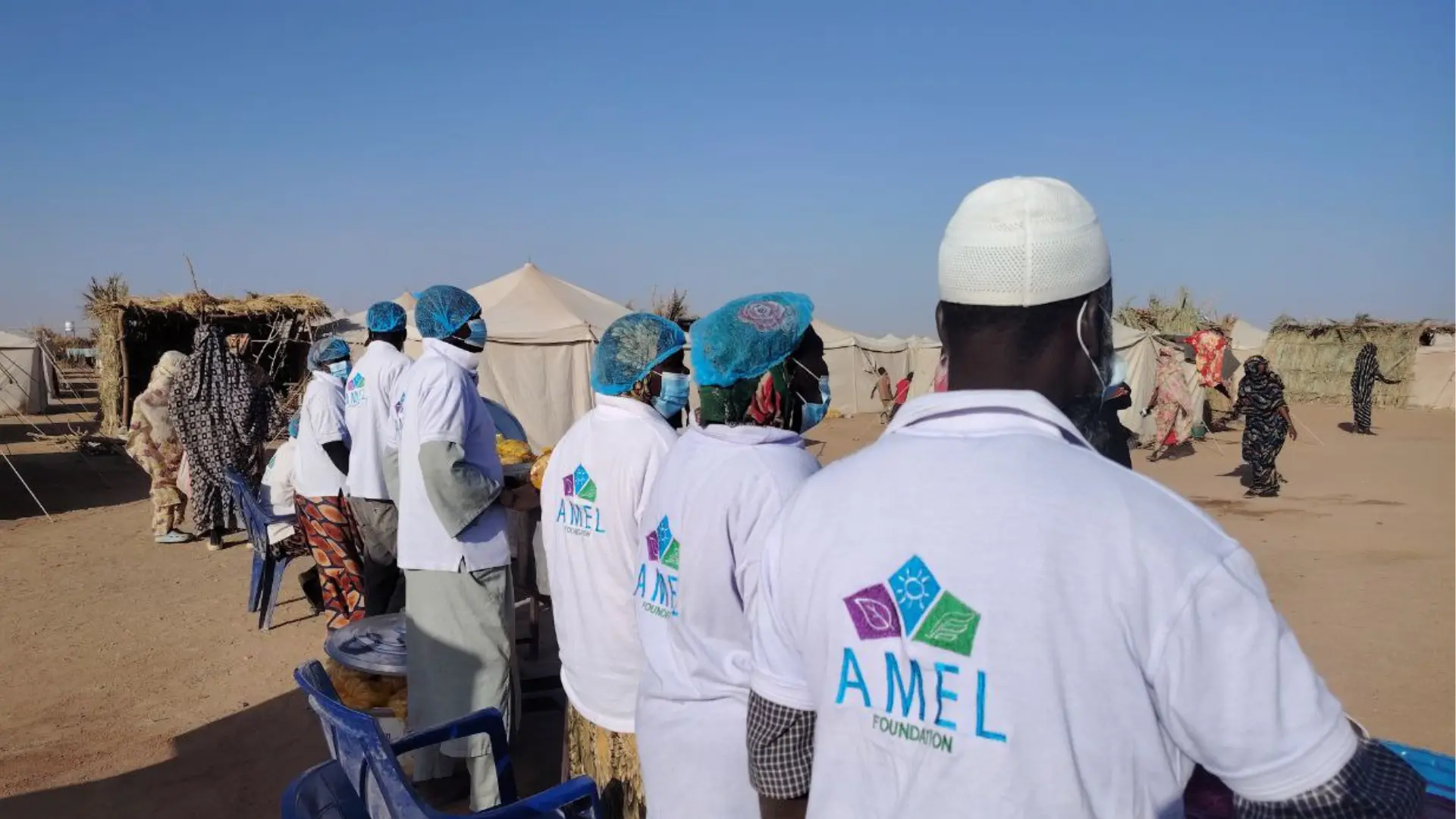
The war in Sudan has left millions of people struggling to survive. Cities once full of life now echo with the sounds of displacement and hunger. Amid this deep humanitarian crisis, volunteers have become the invisible lifeline connecting desperate families with hope. They are the heart of crisis response; the ones cooking, carrying, and comforting when systems collapse.
From the streets of Omdurman to the refugee camps near Kassala, thousands of Sudanese volunteers, along with diaspora supporters, stand shoulder to shoulder in the fight for survival and dignity. Amel Foundation, a USA-based nonprofit organization, recognizes their courage and is working to create more volunteer opportunities that strengthen community support and sustainable impact.
Why Volunteers Matter in Humanitarian Aid
In every humanitarian crisis, it is often the volunteers who arrive first and leave last. They step in where resources are thin, bringing not only food and medicine but also humanity and empathy. According to the United Nations Office for the Coordination of Humanitarian Affairs (OCHA), more than 30 million people in Sudan now depend on humanitarian aid, with almost half the country displaced or facing food insecurity.
In such times, professional aid systems alone cannot meet the scale of need. Volunteers become essential. They cook meals in community kitchens, distribute emergency food baskets, provide health checkups, and help children return to learning. Their contribution is the backbone of Sudan’s recovery, and their stories remind us that even in darkness, global compassion still shines.
The Human Face of Crisis Response
Volunteers in Sudan come from all walks of life. Many were once teachers, students, engineers, or farmers before the conflict began. Today, they organize food relief and healthcare drives with remarkable courage. Through Amel Foundation’s emergency relief programs, these volunteers deliver thousands of hot meals daily in six major safe cities including Wad-Madani, Al-Ghadarif, and Omdurman.
Each delivery tells a story of endurance; mothers waiting patiently for a pot of lentils to feed their children, or elders who share their small portion with neighbors who have none. These small acts of kindness ripple across entire communities, building solidarity when hope seems lost.
Local Volunteers: The Silent Heroes of Sudan
Inside Sudan, thousands of grassroots volunteers have formed neighborhood “emergency response rooms.” These informal teams coordinate logistics, identify vulnerable families, and distribute food and medicine. They embody social responsibility in its purest form a citizen-led movement built on compassion, not politics.
Such volunteers face enormous challenges. Many operate under bombardment, without secure transportation or consistent communication. Yet they continue to show up, often risking their lives to ensure that no one goes hungry or untreated.
Diaspora and Global Volunteers Extending a Lifeline
Beyond Sudan’s borders, Sudanese communities abroad have become a vital source of aid and advocacy. Diaspora volunteers help organize fundraisers, manage donations, and spread awareness about the crisis. In 2024, the Amel Foundation hosted a large fundraising event in the DFW area, uniting supporters to sustain food and healthcare programs across Sudan.
International volunteers also play a growing role. They support through remote coordination, technical expertise, and funding drives. These global partnerships reflect what the World Health Organization (WHO) calls “the critical bridge between local resilience and international solidarity.” Together, they demonstrate that distance cannot weaken compassion.
Food Relief: Restoring Dignity Through Daily Meals
One of the most urgent challenges in Sudan today is hunger. Conflict and displacement have disrupted food supply chains, leaving millions without access to basic nutrition. The Amel Foundation’s food security projects respond to this emergency by providing essential food baskets and hot meals to families in need.
Every plate served by a volunteer is a message of hope — a reminder that someone, somewhere, cares. The simple act of sharing a meal restores more than strength; it restores dignity. As the World Food Programme (WFP) reports, food insecurity in Sudan is now one of the worst in the world. Volunteer-driven food relief not only saves lives but preserves communities’ sense of belonging amid chaos.
Beyond Food: Healthcare and Healing
Volunteering in healthcare has become equally crucial. Across Amel Foundation’s operations, medical professionals volunteer their expertise to treat the sick, distribute medicine, and assist malnourished children. Clinics and mobile health units are being planned to serve vulnerable populations and displaced families.
These efforts are part of the foundation’s broader healthcare initiative, aimed at supporting individuals who have lost access to hospitals and medicine due to the war. Many doctors and nurses working with Amel Foundation are themselves displaced — yet they continue to serve others with remarkable strength and empathy.
Education and Empowerment Through Volunteering
Volunteering is not only about emergency response — it is also about long-term transformation. In Sudan, many volunteers dedicate time to informal education, literacy classes, and youth training. Amel Foundation’s training and development programs empower local leaders to rebuild their communities sustainably.
Education restores purpose and confidence, especially for women and children who have suffered displacement. Every book shared or lesson taught helps pave the way toward a stable and informed society. Volunteers thus become both teachers and torchbearers — illuminating paths toward self-reliance and recovery.
Challenges Facing Volunteers in Conflict Zones
Despite their heroism, volunteers in Sudan face constant danger. Many operate without protective gear or adequate funding. Roads are unsafe, and aid convoys are frequently blocked or looted. Some volunteers have been targeted simply for offering help. According to recent UNHCR reports, even established humanitarian routes have been disrupted by armed conflict.
In addition to physical risks, volunteers experience immense psychological strain. Witnessing suffering daily leads to burnout and trauma, yet many continue to serve because they believe no one else will. Supporting their mental health is as vital as supporting their missions.
Innovation and Resilience: New Models of Aid Delivery
In the face of these challenges, Sudanese volunteers are innovating. They use digital networks to coordinate deliveries, solar-powered pumps to bring clean water to remote areas, and community kitchens that operate entirely on donated resources. These small innovations show that resilience thrives even in adversity.
Amel Foundation works closely with partners such as Amoud Relief & Development and Sails of Hope Organization to strengthen these local systems. By merging local ingenuity with international resources, the foundation helps transform emergency response into sustainable impact — ensuring communities can stand on their own in the future.
Global Compassion and Social Responsibility
The crisis in Sudan is not just a local tragedy — it is a global call to action. Every person, every organization, and every act of kindness contributes to the larger movement for humanity. Volunteering is one of the most powerful expressions of social responsibility because it bridges the gap between empathy and action.
When people around the world donate, volunteer, or share awareness about Sudan’s suffering, they join a collective movement of hope. The Amel Foundation’s mission reflects this belief — to unite communities, rebuild lives, and foster sustainable impact through education, healthcare, and economic empowerment.
A Call to Join the Movement
The world often sees crises as too large to fix. But every major transformation begins with a single volunteer, a single meal, a single act of compassion. Sudan’s recovery will depend on such acts — multiplied by thousands of people who care enough to do something.
Those inspired to serve can explore Amel Foundation’s donation and volunteer opportunities. Whether through direct involvement, fundraising, or spreading awareness, every contribution strengthens the chain of care that keeps Sudanese families alive today.
Volunteering is not only about giving time — it is about giving hope. And in Sudan, hope remains the most powerful force for change.
Final Reflection
In a world facing growing humanitarian crises, the story of Sudan and its volunteers stands as a testament to courage and solidarity. From the quiet resilience of local aid workers to the generosity of diaspora donors, every action counts. The Amel Foundation continues to amplify their efforts — not as saviors, but as partners in a shared journey toward healing and peace.
Together, through compassion and service, we can turn the tide of suffering into a movement of recovery and renewal. Sudan’s story is far from over — and volunteers are writing its most hopeful chapter yet.

Comments are closed