
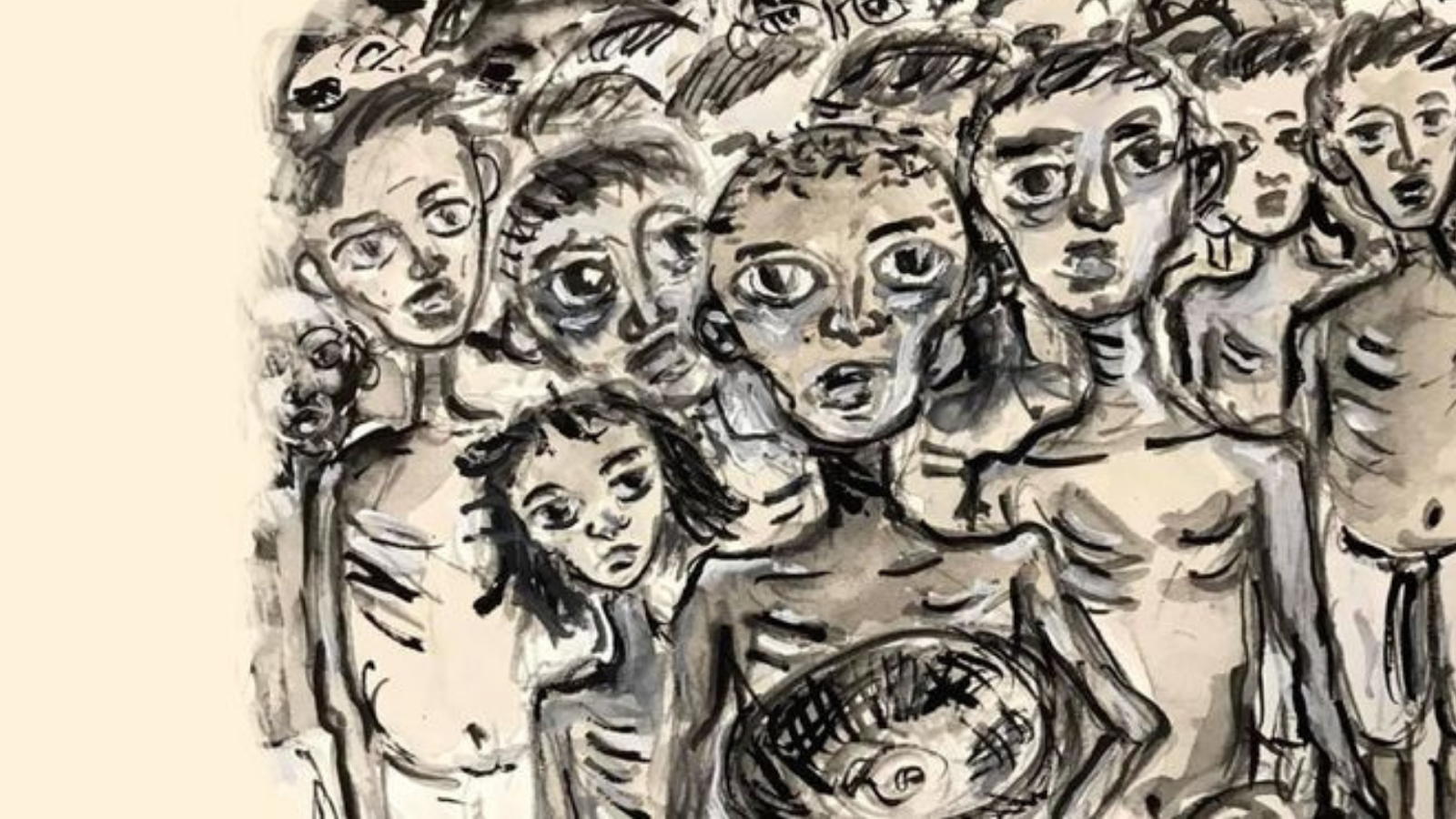
Understanding Famine Beyond Statistics
Famine is not only a lack of food, it is the collapse of systems that keep people alive. When food prices soar, crops fail, and aid cannot reach communities, famine takes root quietly before the world begins to notice. According to the World Food Programme (WFP), over 40 million people worldwide currently face the threat of starvation, with Sudan emerging as one of the hardest-hit nations in recent history.
The global hunger crisis is no longer confined to remote areas. Conflict, climate change, and economic instability have woven hunger into the daily reality of millions. Famine does not strike suddenly — it builds layer by layer, as resilience breaks and hope fades.
What Defines a Famine?
The United Nations defines famine as the most severe stage of food insecurity, where at least 20% of households face extreme food shortages, acute malnutrition exceeds 30%, and death rates surpass crisis thresholds. But behind these numbers are human lives, children too weak to play, mothers skipping meals to feed their families, and entire villages surviving on one shared bowl of grain.
Famine is both a humanitarian and moral failure. It signals that early warning signs, drought, inflation, and displacement were ignored. Recognizing famine means recognizing that the systems meant to protect humanity have fallen silent.
The Global Causes of Hunger and Malnutrition
Every famine tells a different story, but the roots often intertwine: conflict, poverty, climate shocks, and inequality. In Sudan, years of war and political unrest have destroyed farms, disrupted markets, and displaced millions. Across regions like the Horn of Africa, prolonged droughts caused by climate change have erased livelihoods that once sustained entire communities.
The link between climate and famine is undeniable. When the rains stop, the soil cracks, crops fail, and livestock die. With fewer resources, families are forced to migrate, leaving behind their homes and traditions. As Oxfam America explains, famine is not simply a food problem, it is a symptom of global inequality and weak humanitarian response systems.
Sudan: A Nation on the Brink
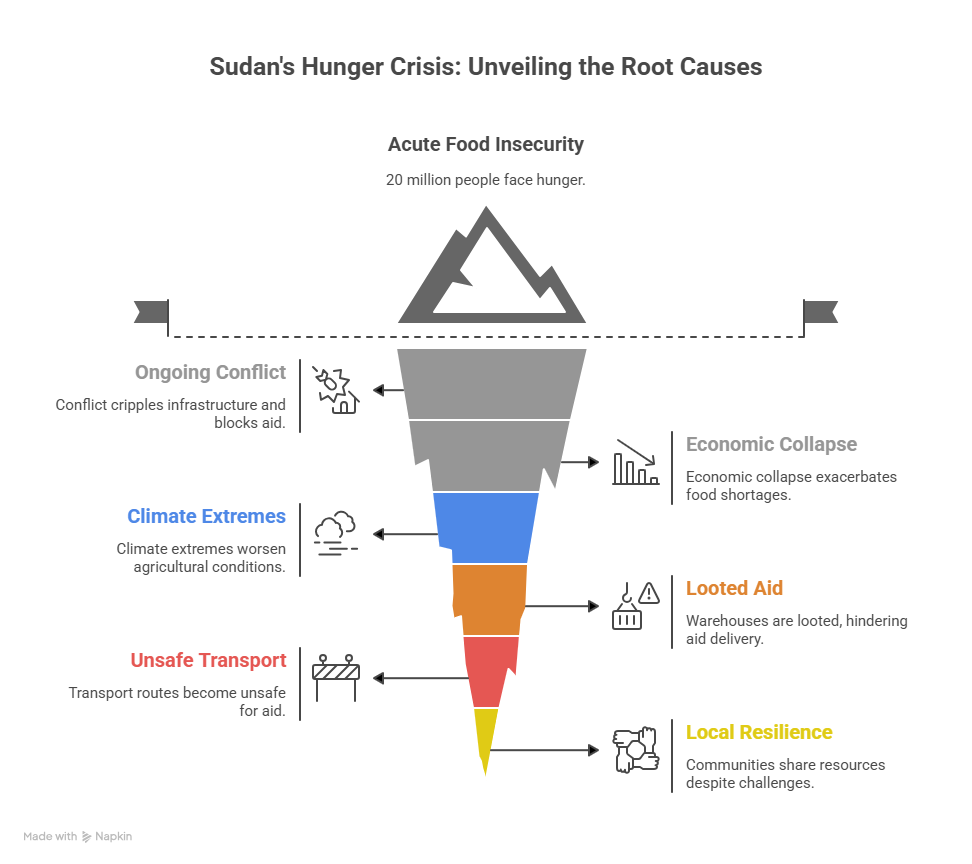
Sudan stands today at the epicenter of a growing global hunger crisis. Over 20 million people — nearly half the population — face acute food insecurity. In several regions, conditions already meet famine thresholds. The ongoing conflict since 2023 has crippled infrastructure, blocked humanitarian corridors, and forced millions from their homes.
ReliefWeb describes Sudan’s famine as “a perfect storm” of violence, economic collapse, and climate extremes. Humanitarian organizations struggle to deliver emergency aid as warehouses are looted, and transport routes become unsafe. Yet amidst this chaos, local resilience continues to shine through. Communities share the little they have, proving that even in the darkest moments, solidarity remains a lifeline.
The Humanitarian Response: A Race Against Time
Humanitarian response teams work tirelessly to reach communities before famine turns irreversible. The AMEL Foundation, alongside partners, prioritizes emergency food assistance, water distribution, and nutritional support to mothers and children. These interventions are not just about feeding people — they restore dignity and stability in times of despair.
According to the United Nations Office for the Coordination of Humanitarian Affairs (OCHA), timely intervention can save millions if the world acts together. Yet funding gaps and access restrictions continue to slow progress. Organizations like AMEL Foundation have had to innovate, deploying local teams, investing in mobile food security units, and engaging communities directly to ensure that help reaches those who need it most.
Building Food Security Through Community Resilience
True famine relief goes beyond emergency aid. It builds the capacity of people to endure future shocks. That’s why initiatives like AMEL Foundation’s Food Security Program are vital. By helping farmers rehabilitate their land, restoring irrigation systems, and introducing drought-resistant seeds, such programs ensure families can once again grow their own food.
Community resilience means empowerment. It is seen when local women lead small-scale farming cooperatives or when youth groups develop creative water storage solutions. Through these actions, food security transforms from a fragile condition into a foundation for recovery.
The Role of Global Awareness and Solidarity
Famine thrives in silence. The less the world sees it, the more it spreads. Raising global awareness is one of the strongest tools against hunger. Media, social networks, and humanitarian storytelling play a vital role in making distant suffering visible.
At the AMEL Foundation, sharing the human stories behind the crisis helps donors and supporters understand where their contributions go. Through initiatives like Our Emergency Projects, every donation becomes a link in the chain of survival , from procurement to delivery to the final meal in a child’s hands. Transparency builds trust, and trust fuels compassion.
When the world knows, it cares. And when it cares, it acts.
From Emergency Aid to Sustainable Recovery
Short-term interventions can save lives, but long-term solutions sustain them. Sustainable recovery is the bridge between crisis and stability. It includes rebuilding schools, training local health workers, and supporting income-generating projects that empower families to rebuild with dignity.
Programs focused on education, agriculture, and microfinance are helping former aid recipients become community leaders. This shift from dependency to self-reliance is the true goal of humanitarian work, not endless aid, but renewed independence. The AMEL Foundation’s Training and Development Programs embody this principle, nurturing local capacities for generations to come.
Famine and the Future of Global Cooperation
Ending famine requires more than food drops, it requires systemic change. Governments, NGOs, and global institutions must address root causes like conflict, inequality, and environmental degradation. Investment in peacebuilding and sustainable agriculture is as important as emergency aid itself.
The International Food Policy Research Institute (IFPRI) stresses that prevention costs far less than response. A single dollar spent on resilience today can save seven dollars in future humanitarian costs. Collective action is not charity; it is strategy.
If the world commits to coordinated humanitarian response, improved food systems, and climate adaptation, the cycle of famine can be broken for good.
Conclusion: A Call to Humanity
Famine is not inevitable, it is preventable. Every donation, every act of advocacy, and every shared story adds to the momentum for change. The suffering of millions in Sudan and beyond reminds us that compassion is not a seasonal response; it is a shared responsibility.
The AMEL Foundation continues to stand with those at the frontlines of hunger, ensuring that famine relief translates into hope, food security, and a sustainable recovery for all. Ending famine begins not with policies, but with people who care enough to act.

Comments are closed