
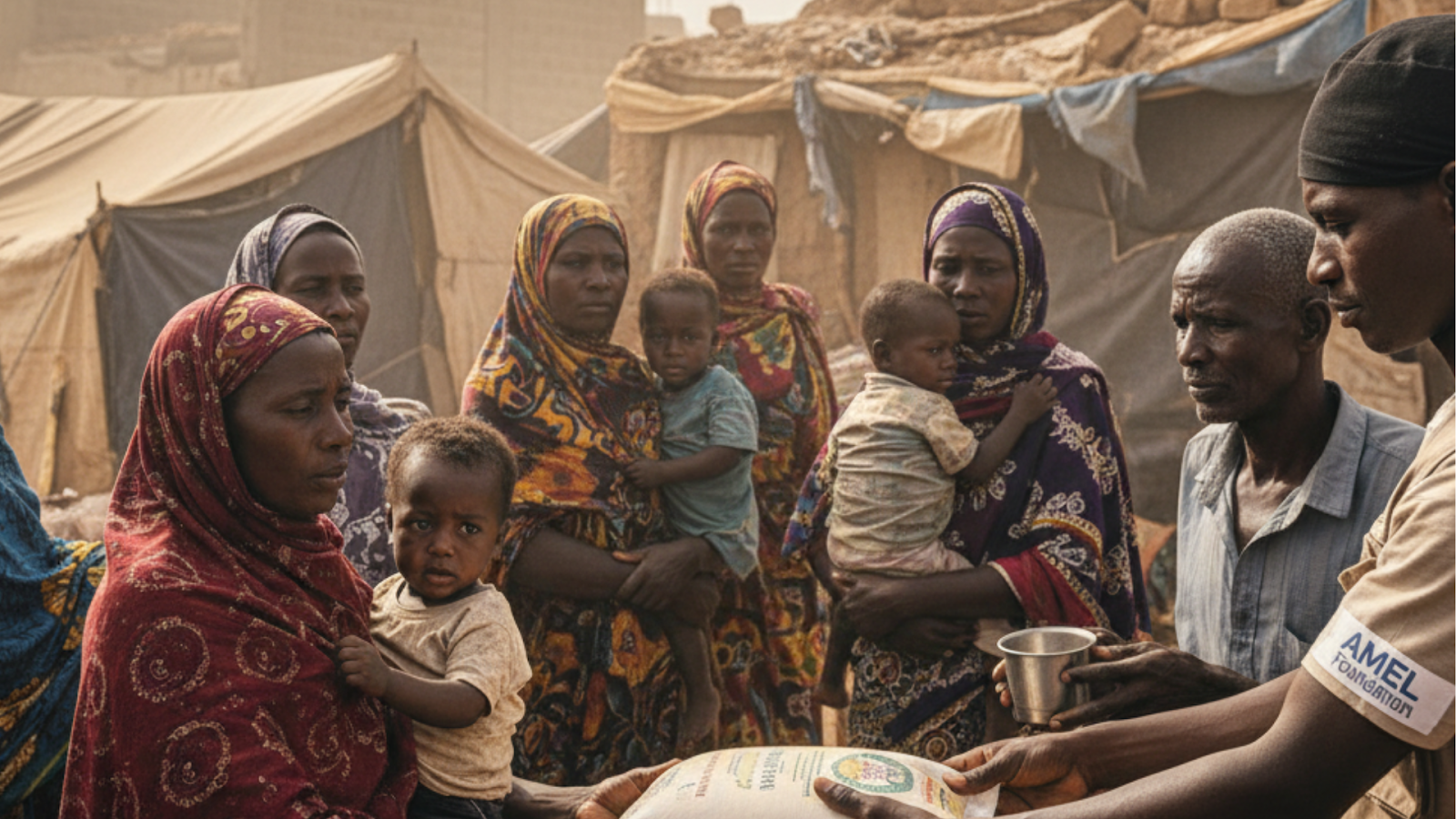
The conflict that ignited in Sudan in April 2023 has not simply devolved into a military stalemate; it has plunged a nation into one of the most severe and complex humanitarian crises the world has witnessed this century. As observers and actors on the ground, the AMEL Foundation understands that the true tragedy lies not just in the fighting, but in the near-total collapse of civilian life and state infrastructure, a void where the NGO human rights role has become not just necessary, but entirely indispensable. This is a story of widespread violation of fundamental human dignity, countered only by the tireless, often perilous, work of local and international humanitarian organizations striving to meet needs and secure a future for the Sudanese people.
The Catastrophic Scale of Civilian Violation
The Weaponization of Displacement
The primary characteristic of the Sudanese crisis is the staggering scale of forced movement, where displacement itself has been weaponized against the civilian population. This crisis now accounts for the world’s largest number of internally displaced persons (IDPs), with over 10.4 million people forcibly driven from their homes as of August 2024, according to a latest UN OCHA report. This extreme upheaval matters because it instantly strips families of protection, livelihoods, and access to basic services, making the protection of civilians the most urgent humanitarian imperative. Over half of those displaced are children, leaving them profoundly vulnerable to trauma, recruitment, and exploitation in direct violation of international law.
Famine and the Collapse of Healthcare
The secondary and equally lethal crisis is the descent into famine, a man-made moral failure driven by blockades, looting, and the deliberate destruction of agricultural capacity. Over 25 million people now face crisis or worse levels of acute food insecurity, a number that has swelled dramatically due to the conflict. This catastrophic lack of sustenance is significant because it leads directly to irreversible damage and excess mortality; with more than 80% of hospitals in conflict zones non-operational, the collapse of the health system makes malnutrition a death sentence, compounding the crisis with a surge in preventable disease outbreaks. The scale of the destruction to medical facilities is systematic and deliberate, as highlighted in the latest analysis on the conflict-driven collapse of Sudan’s health system. This failure to protect basic survival rights reflects a profound lapse in global humanitarian ethics.
The Educational Catastrophe
The systematic attack on civilian infrastructure has triggered a generational crisis in education, which represents a clear violation of children’s rights. The sheer scale of the crisis means 19 million school-age children risk losing their education, a catastrophe highlighted by UNICEF.
Without access to learning, these children face heightened risks of child marriage, exploitation, and recruitment by armed groups, further cementing the long-term instability of the nation.
The Humanitarian Anchor: Fulfilling the NGO Human Rights Role
In a context where the state is either complicit in violence or simply non-existent, NGOs step forward to become the de facto upholders of human rights. Their function moves beyond simple aid delivery to performing a crucial, comprehensive NGO human rights role centered on the preservation of life and dignity.
The Frontline of Humanitarian Ethics
Humanitarian organizations operate based on core principles of impartiality, neutrality, and independence, which form the bedrock of humanitarian ethics in war zones. This ethical commitment is vital because it allows NGOs to engage across conflict lines and reach populations that might otherwise be cut off due to political or ethnic considerations. For instance, the WHO notes that only 42.7% of health funding was met as of August 2024, severely limiting the ability to address essential needs. AMEL’s approach, focused on our Program Overview, demonstrates how localized expertise can be paired with global standards to deliver assistance based purely on need, transcending the polarizing politics of the conflict. This principled access is frequently challenged, but it is the essential ingredient in maintaining a thread of support and sanity for millions caught in the crossfire.
Local Networks and Civil Society Empowerment
The enduring Community Resilience of the Sudanese people is channeled primarily through sophisticated local resistance and aid networks, proving that the foundation of any recovery must be civil society empowerment. These localized groups are the true engine of survival; they possess critical knowledge of shifting frontlines and the trust of beneficiaries, enabling them to circumvent military checkpoints and deliver aid to the most marginalized. Supporting these groups is the most effective way to deploy aid, transforming a top-down response into a resilient, decentralized system. Our work, as detailed in our Food Security initiatives, clearly shows that this localization strategy ensures local capacity is not overlooked but instead acts as the primary responder, securing a foundation for future stability.
The Imperative of Accountability and Justice
Documenting Violations for Future Accountability
The NGO human rights role extends far beyond the immediate provision of food and medicine; it is inextricably linked to securing a future where perpetrators are held to account and human rights are permanently enshrined. NGOs are uniquely positioned to collect evidence of atrocities in areas inaccessible to international investigators, making them crucial agents for accountability and justice. This documentation work is painstaking and dangerous, yet it is essential to ensure that crimes, including widespread sexual violence and ethnic targeting, do not go unrecorded. This effort serves as a critical deterrent, reminding commanders that their actions have long-term consequences under international law, as documented by organizations urging the ICC to expand its jurisdiction. The compilation of these dossiers preserves the historical truth of the conflict, which is vital for any eventual national reconciliation process.
Crisis Advocacy and the Funding Deficit
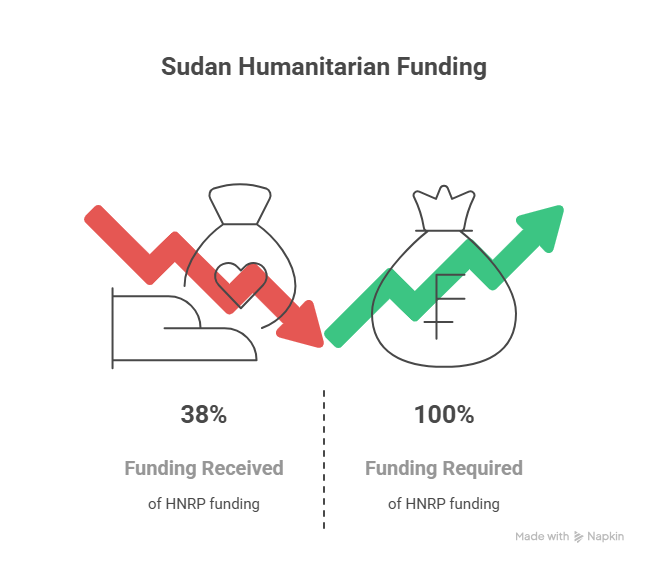
The humanitarian crisis is compounded by a profound global neglect, manifesting as an alarming humanitarian needs funding gap that jeopardizes the entire aid operation. The 2024 Humanitarian Response Plan, requiring $2.7 billion, was only 69.1% funded by September 2025, signaling a devastating global failure to prioritize the crisis, as shown by the UN’s Financial Tracking Service. This deficit necessitates aggressive crisis advocacy by NGOs, who must constantly lobby international donors and policymakers to allocate the required resources. Every unmet funding goal translates directly into more IDPs facing famine conditions, accelerating the cycle of suffering and underscoring the lethal consequences of international inaction. For those motivated to act, the opportunity to support these essential programs and close the gap is immediate, channeled through focused efforts like the Current Appeal.
Securing the Future: Conflict Resolution and Democratic Transition
The ultimate success of the humanitarian effort will not be measured in the number of meals distributed, but in the establishment of a sustainable peace rooted in respect for human rights. This requires NGOs to engage in two forward-looking areas: conflict resolution and democratic transition.
The Path to Conflict Resolution Through Local Dialogue
While military commanders wage war at the national level, humanitarian actors often facilitate local ceasefires and dialogue, paving the quiet way toward broader conflict resolution. By working with community leaders and local associations, NGOs create safe spaces where the principles of peace and non-violence can be discussed, often through programs focusing on human rights education. These local agreements, though fragile, save lives, open aid routes, and demonstrate that coexistence is possible, providing a scalable model for a future national peace process. This subtle, persistent diplomatic effort, as illustrated in our capacity-building framework for local actors, is a cornerstone of the long-term NGO human rights role.
Educating for Democratic Transition
The youth of Sudan, having led the initial pro-democracy protests, remain the country’s greatest asset for a future free of military rule. The NGO human rights role includes preparing this generation for governance through robust programs in human rights education and civic engagement. This is critical because the next phase of Sudanese history must be built on a foundation of respect for civil liberties and the rule of law, not just military might. By investing in these future leaders, as highlighted in our capacity-building work and the ethos of our Training and Development initiatives, AMEL and its partners are actively laying the groundwork for a genuine democratic transition when the conflict finally subsides.
Conclusion: The Unwavering Mandate
The situation in Sudan is a grave test of global humanity, marked by catastrophic displacement and the failure to prevent famine. The courage of the Sudanese people, demonstrated through powerful Community Resilience and civil society empowerment, is the only light in this darkness. The NGO human rights role is not merely to provide aid, but to act as a moral shield, relentlessly pursuing protection of civilians, demanding accountability and justice, and cultivating the seeds of a future democratic transition. The world must not abandon the people of Sudan, but rather empower the local networks that risk everything to keep them alive and ready for the peace they deserve.

Comments are closed