
Introduction: Faith, Responsibility, and a World in Crisis
The question of who pays zakat al fitr is deeply spiritual, but today it is also urgently humanitarian. Zakat al Fitr is not only a religious act performed at the end of Ramadan. It is a lifeline. In a world where conflict has pushed millions into hunger, this small but powerful obligation carries enormous meaning.
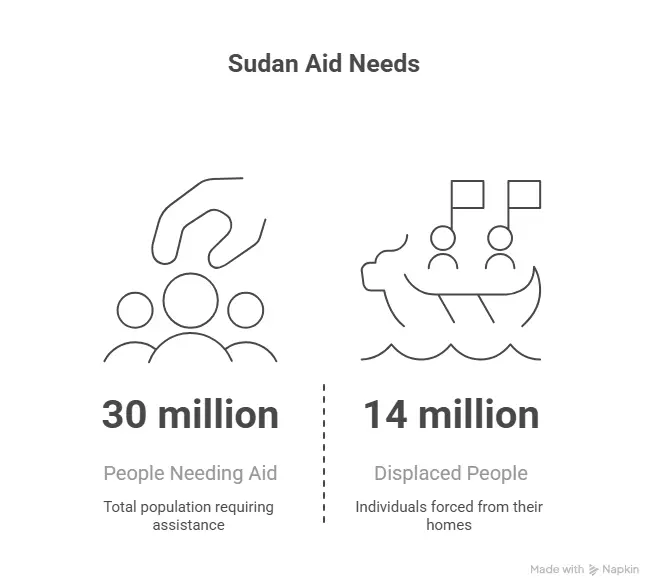
Nowhere is this more visible than in Sudan. Since April 2023, war between armed groups has created what the United Nations describes as the world’s worst displacement crisis. According to the United Nations reports on Sudan, more than 30 million people need humanitarian assistance. Over 14 million have been displaced, and famine conditions have been declared in parts of Darfur. In such a reality, understanding who must give Zakat al Fitr becomes more than a legal discussion. It becomes a moral call to action.
At the AMEL Foundation, this question is answered with both faith and urgency. Zakat al Fitr is an obligation rooted in compassion, and today it stands as one of the fastest ways to deliver direct food support to families who have lost everything.
Understanding Zakat al Fitr in Islam
Zakat al Fitr is a mandatory charity that Muslims give at the end of Ramadan before the Eid prayer. It is separate from annual Zakat. It is required from every Muslim who has enough food beyond their basic needs on the night before Eid.
The purpose of this charity is twofold. First, it purifies the fast of Ramadan. Second, it ensures that the poor can celebrate Eid with dignity. The Zakat al Fitr rules in Islam clearly state that it must be paid before the Eid prayer so that it reaches the needy in time. Scholars have emphasized that this charity is about inclusion. No one should be left hungry on Eid.
In humanitarian crises, this principle becomes even more powerful. When entire communities are displaced and cut off from resources, Zakat al Fitr restores dignity at the most vulnerable moment.
Who Is Obligated to Pay Zakat al Fitr?
Zakat al Fitr Eligibility Explained
The core answer to who is obligated to pay Zakat al Fitr is simple. Every Muslim who possesses more than their essential food for the day and night of Eid must pay it. This includes men and women, young and old.
The concept of Zakat al Fitr eligibility is based on having basic stability. It does not require wealth in the traditional sense. If a person has food surplus beyond immediate need, they carry the responsibility. The amount is modest, often equivalent to the cost of staple food for one person.
This makes Zakat al Fitr unique. It is universal and accessible. It ensures that even those with modest means can participate in supporting those in extreme hardship.
Zakat al Fitr Payment Responsibility Within the Family
In Islam, the head of the household carries Zakat al Fitr payment responsibility for those under their care. This includes children and dependents. The principle of Zakat al Fitr for dependents ensures that each member of the family is spiritually represented in this act of giving.
For example, a parent must give Zakat al Fitr on behalf of their minor children. If elderly parents are financially dependent, their Zakat may also fall under the caregiver’s responsibility. This structure ensures that no individual is overlooked.
In humanitarian contexts, this teaching reminds families worldwide that their obligation extends beyond themselves. When millions of Sudanese families are displaced and separated, this collective responsibility becomes deeply symbolic.
Why Timing Matters: Before the Eid Prayer
Zakat al Fitr must be given before the Eid prayer. This is not a minor detail. It defines the entire purpose of the charity. The concept of Zakat al Fitr before Eid prayer ensures that recipients can prepare meals and celebrate without anxiety.
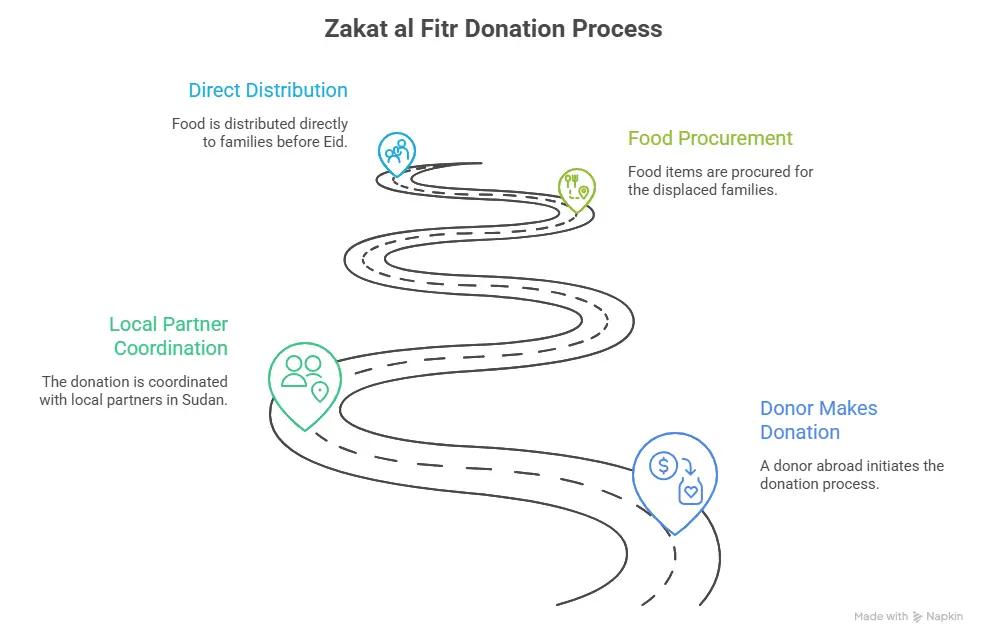
In crisis zones, this timing is critical. According to data from the UN Office for the Coordination of Humanitarian Affairs, access restrictions and funding shortages have slowed large-scale aid delivery across Sudan. Local organisations and community-led initiatives often move faster than global systems.
Zakat al Fitr fills this gap. Because it is collected and distributed rapidly, it can reach families in displacement camps just days before Eid, turning despair into relief.
Sudan’s Humanitarian Emergency and the Role of Zakat
Sudan is facing famine conditions in multiple regions. The World Health Organization has also warned of cholera outbreaks among displaced communities. Hunger and disease are spreading at a time when funding for humanitarian appeals is declining.
More than 24 million people are facing acute food insecurity. Among them are millions of children. In displacement camps, families survive on minimal rations. For many, Eid arrives without food or celebration.
In this reality, understanding who must give Zakat al Fitr becomes directly connected to saving lives. For families in safer regions or in the diaspora, this obligation can translate into immediate meals for those trapped by conflict.
Zakat al Fitr Beneficiaries in Times of War
Islamic law clearly identifies Zakat al Fitr beneficiaries as the poor and the needy. In Sudan today, displaced families, refugees, widows, and orphaned children fall squarely into this category.
The UNHCR refugee reports highlight how millions have fled to neighboring countries such as Chad, Egypt, and South Sudan. Others remain internally displaced without stable shelter.
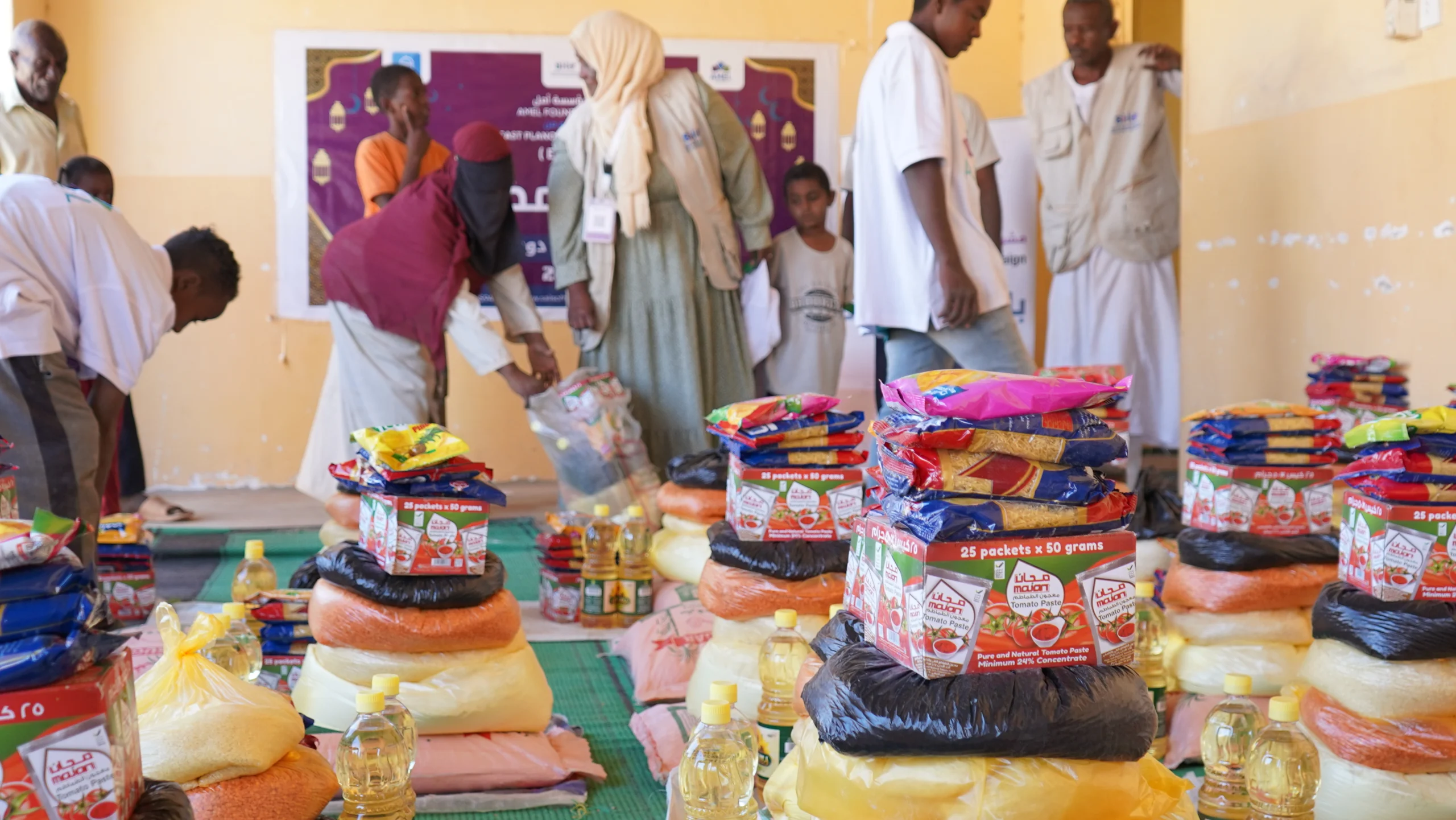
Through programs like AMEL Foundation’s Zakatul Fitr initiative, donations are converted into food parcels and cooked meals distributed directly to vulnerable families. These efforts follow clear Zakat al Fitr distribution guidelines, ensuring that funds reach those most eligible under Islamic principles.
Zakat does not replace global humanitarian funding, but it strengthens it. It is often faster, community-driven, and spiritually motivated.
The Role of the Global Muslim Community
The Sudan crisis has mobilized diaspora communities around the world. Many are asking not only who pays zakat al fitr, but where it should go.
Islamic scholars have long affirmed that Zakat can be sent to regions experiencing severe hardship. When famine conditions exist, prioritizing such areas aligns with the spirit of Islamic charity obligations.
Through AMEL Foundation’s food security programs, global donors are able to channel their Zakat to structured distribution systems on the ground. These systems work with local networks that understand community needs.
In times of war, local knowledge is critical. It ensures aid is delivered safely and with dignity.
Challenges in Delivering Aid
Despite the power of Zakat, delivering aid in conflict zones is not simple. Armed checkpoints, damaged infrastructure, and insecurity complicate logistics. Funding gaps also threaten sustained operations.
According to humanitarian briefings from the United Nations, 2026 funding projections for Sudan show severe shortfalls. This increases reliance on faith-based giving during Ramadan.
Zakat al Fitr does not solve political conflict. However, it provides immediate relief in moments when traditional systems slow down. Its religious timing ensures urgency, and its modest amount makes it accessible to millions of donors.
AMEL Foundation’s Commitment
The AMEL Foundation operates at the intersection of faith and humanitarian action. With a history rooted in community response, the organisation has focused on emergency aid, food distribution, healthcare, and water access.
Through its Emergency Projects, AMEL responds directly to displacement crises. Zakat al Fitr campaigns are carefully structured to comply with Islamic guidelines while maintaining transparency and accountability.
Every donation is treated as a trust. In a context where families have lost homes, income, and security, that trust carries sacred weight.
Conclusion: A Small Obligation, A Lifeline for Millions
So, who pays zakat al fitr? Every Muslim who has the means beyond basic need carries this responsibility. It is not limited by wealth or geography. It is defined by compassion and obligation.
In peaceful times, Zakat al Fitr ensures celebration for the poor. In times of war, it ensures survival. In Sudan today, where famine, displacement, and disease threaten millions, this obligation becomes a lifeline.
The question is no longer theoretical. It is urgent. By fulfilling this duty before Eid prayer, donors around the world can help restore dignity to families who have endured unimaginable hardship.
Through structured programs, transparent distribution, and unwavering commitment, the AMEL Foundation continues to ensure that Zakat al Fitr reaches those who need it most. In doing so, faith becomes action, and action becomes hope.

Comments are closed