
Updated: August 2026
A health facility does much more than treat people who are already seriously ill.
It vaccinates children. It monitors pregnancies. It treats infections before they become emergencies. It provides medicines for people living with chronic conditions. It identifies malnutrition. It refers complicated cases to hospitals. It detects outbreaks. And, sometimes, it provides the difference between an illness that can be treated and one that becomes life-threatening.
In Sudan, years of conflict have severely weakened this system.
In April 2026, the World Health Organization reported that 21 million people in Sudan lacked access to health services and that 37% of health facilities across the country’s 18 states were non-functional. Disease outbreaks, malnutrition, displacement, attacks on healthcare and shortages of medicines and supplies were placing additional pressure on the facilities that remained open.
The number of closed facilities tells only part of the story.
The larger question is what happens after a clinic stops functioning.
For patients, the consequences can spread far beyond that building.
How Severe Is Sudan’s Healthcare Crisis in 2026?
Sudan entered the fourth year of conflict in April 2026 with enormous humanitarian and healthcare needs.
WHO reported that around 34 million people required humanitarian assistance, while approximately 21 million lacked adequate access to health services. Across Sudan, 37% of health facilities remained non-functional.
The disruption is particularly severe in areas experiencing active fighting.
Hospitals and clinics have been damaged, destroyed, looted or forced to close. Other facilities remain technically open but operate with limited staff, medicines, equipment, electricity or supplies.
Healthcare workers and patients have also faced direct danger.
By April 2026, WHO had verified 217 attacks on healthcare since the conflict began in April 2023, associated with 2,052 deaths and 810 injuries.
One attack can affect far more people than those present at the time.
If an operating theatre is destroyed, surgeries may stop.
If a pharmacy or medical warehouse is damaged, multiple facilities may lose access to essential medicines.
If health workers are killed, injured or displaced, the knowledge and capacity they provided may disappear from an entire community.
That is why the impact of attacks on healthcare continues long after the immediate event.
What Does It Mean When a Clinic Becomes “Non-Functional”?
A non-functional health facility is not simply a building with its doors closed.
The reason it stopped operating matters.
Some facilities have been physically damaged.
Others may lack health workers because staff have fled or cannot safely travel to work.
Some may have no reliable medicines, medical supplies, electricity, fuel or clean water.
Others may be inaccessible because roads have become dangerous or surrounding communities have been displaced.
Even facilities classified as functioning may not necessarily provide the full range of services they once offered.
WHO’s Health Resources and Services Availability Monitoring System has been tracking thousands of health-service delivery units across Sudan to understand not only whether facilities exist, but whether essential services and resources are actually available.
This distinction matters.
A clinic can be standing and still be unable to provide the care a patient needs.
Emergency Conditions Become More Dangerous
One of the most immediate consequences of a clinic closing is the loss of emergency care.
In normal circumstances, someone experiencing severe bleeding, trauma, infection or another medical emergency may be taken to the nearest health facility.
In a conflict setting, that nearest facility may no longer operate.
WHO reports that where services have been suspended, patients can be forced to make long and dangerous journeys to reach functioning healthcare facilities.
That additional distance matters.
Emergencies are time-sensitive.
A patient who might have received treatment within minutes or hours can instead spend critical time searching for transport, travelling across insecure roads or moving between facilities trying to find one that has the staff and equipment required.
For displaced families, the problem can be even greater because they may not know where the nearest functioning facility is.
Pregnancy and Childbirth Become Riskier
The loss of healthcare services also has serious consequences for pregnant women and newborns.
Pregnancy requires more than access to a hospital at the moment of delivery.
A functioning health system provides antenatal care, monitors complications, supports safe delivery, provides postnatal care and manages emergencies such as severe bleeding, infection or obstructed labour.
When these services disappear, preventable complications become harder to identify and treat.
In March 2026, an attack rendered Al-Daein Teaching Hospital non-functional. UNFPA reported that women and adolescent girls in the surrounding area were consequently left without access to critical sexual and reproductive health services, including emergency obstetric care.
UNFPA’s mapping of 285 facilities assessed for clinical services found that only 27% were fully functional. This was a specific assessment related to sexual and reproductive health services and should not be interpreted as the nationwide functionality rate for all Sudanese health facilities, but it illustrates how limited access can become for women requiring specialized care.
When emergency obstetric services disappear, a complication that might normally be manageable can become dangerous.
Routine Childhood Healthcare Begins to Disappear
Health systems also protect children before they become sick.
Routine vaccination is one example.
Years of conflict have disrupted immunization services in Sudan. In April 2026, UNICEF reported that approximately 1.5 million children under five were insufficiently protected against polio and other vaccine-preventable diseases.
Reaching those children has required major vaccination campaigns and extraordinary efforts to move vaccines into underserved and conflict-affected areas.
In West Darfur, UNICEF described communities where conflict had almost completely cut off routine health services. Teams had to travel through highly insecure conditions to vaccinate children against measles and rubella.
When clinics close, children may miss more than vaccinations.
Regular growth monitoring, treatment for childhood illnesses, nutrition screening and referrals can also be interrupted.
The effect may not be immediately visible.
But as more children miss preventive healthcare, communities become increasingly vulnerable to diseases that functioning health systems would normally help control.
Disease Outbreaks Become Harder to Control
Sudan is confronting healthcare disruption at the same time as multiple infectious diseases.
WHO reported outbreaks of malaria, dengue, measles, polio, hepatitis E, meningitis and diphtheria in different parts of the country during 2026.
UNICEF’s mid-year reporting also described continued outbreaks of cholera, dengue, malaria, measles and hepatitis E amid population displacement, inadequate water and sanitation and limited access to healthcare.
A functioning health facility is part of the defence against an outbreak.
It does not only treat patients.
Health workers identify unusual symptoms, report suspected cases, collect samples, vaccinate vulnerable populations, educate communities and refer severe patients.
When those systems weaken, an outbreak becomes harder to detect and contain.
The situation is particularly dangerous where displacement has increased population density while access to clean water and sanitation remains inadequate.
A disease that could previously have been detected through routine healthcare may therefore spread through a community whose ability to seek treatment is already limited.
People Living With Chronic Conditions Lose Continuity of Care
Not every healthcare emergency begins suddenly.
Millions of people depend on health services continuously.
Someone living with diabetes may require regular medicine and monitoring.
A patient with hypertension may require ongoing treatment.
People with kidney disease, cardiovascular disease or other long-term conditions may depend on repeated consultations, medicines or specialized services.
WHO reported in January 2026 that access to preventive and curative care in Sudan remained limited, including the management of chronic conditions.
Conflict can interrupt that continuity at several points.
A doctor may no longer be available.
A medicine may disappear from the supply chain.
A laboratory may stop operating.
Transport to the nearest functioning hospital may become unaffordable or unsafe.
Medical records may be lost during displacement.
The patient’s underlying condition has not disappeared simply because the health system around them has.
In fact, losing regular treatment can turn a manageable chronic condition into an emergency.
Malnourished Children Lose Access to Treatment
Sudan’s health crisis is also closely connected to its nutrition crisis.
More than four million people were estimated to be acutely malnourished in 2026, according to data cited by WHO, while hundreds of thousands of children were expected to experience severe acute malnutrition.
Children with severe acute malnutrition and medical complications require specialized healthcare.
WHO reported that more than 118,000 children with complicated severe acute malnutrition had received treatment through supported services by April 2026.
UNICEF and partners reported treating 174,700 children with severe acute malnutrition during the first half of 2026.
These services depend on functioning health and nutrition facilities, trained staff, therapeutic supplies and reliable referrals.
When a clinic closes, malnutrition screening may stop.
When a stabilization centre becomes inaccessible, a child with complications may need to travel much farther for care.
And when healthcare, food insecurity and disease occur together, children become especially vulnerable.
The Remaining Health Facilities Carry More Pressure
When one clinic closes, patients do not simply disappear.
Many move to another facility.
That means remaining hospitals and clinics can be asked to serve more people with the same — or sometimes fewer — resources.
They may receive patients from neighbouring communities, displaced populations and areas where hospitals have stopped functioning altogether.
Beds fill.
Health workers face heavier workloads.
Medicines are consumed more quickly.
Waiting times increase.
Referral systems become harder to manage.
At the same time, the health system is dealing with disrupted supply chains, insecurity and inadequate funding.
In June 2026, the Sudan Health Cluster warned that a major funding disruption placed 335 health facilities and services across 13 states at immediate risk of closure or service reduction.
This demonstrates another important part of the crisis.
A health facility does not have to be physically attacked to stop operating.
It can also lose the funding required to pay staff, maintain services, purchase supplies and keep programmes functioning.
As of June, Sudan’s Health Cluster reported that its response was only 36% funded, while millions of people continued to require health assistance.
Mobile Clinics and Primary Healthcare Can Help Fill Some Gaps
When permanent healthcare facilities become inaccessible, humanitarian organizations often rely on alternative approaches.
Mobile clinics can travel to displaced or hard-to-reach communities.
Primary health centres can be supported with additional supplies and staff.
Vaccination teams can travel directly into communities.
Local health workers can provide essential care closer to where people are living.
These approaches have maintained access to healthcare for millions of people.
By June 2026, UNICEF and its partners reported providing 1.3 million people with primary healthcare services during the first half of the year.
WHO reported in April that WHO-supported primary healthcare centres, mobile clinics and hospitals had provided essential healthcare to more than 4.1 million people.
These interventions are critical.
But mobile and humanitarian services cannot completely replace a functioning national healthcare system.
Complex surgery, emergency obstetric care, laboratory diagnostics, intensive treatment and many chronic-care services require infrastructure, equipment, specialist staff and reliable supply chains.
Emergency humanitarian healthcare can keep essential services alive.
Long-term recovery requires functioning health systems.
Protecting Health Workers Is Part of Protecting Healthcare
A hospital cannot function without people.
Doctors, nurses, midwives, pharmacists, laboratory staff, vaccinators, ambulance crews and community health workers all form part of the system.
Attacks on healthcare therefore affect more than physical infrastructure.
In April 2026, an attack on Al Jabalayn Teaching Hospital in White Nile State killed ten health workers and injured others. WHO and UNICEF reported that the hospital’s emergency room and operating theatre were completely destroyed.
The loss of trained health workers can be particularly difficult to replace.
A building can eventually be repaired.
Replacing years of medical training, experience and local knowledge can take much longer.
Healthcare workers also need to feel safe enough to remain in their communities and continue providing services.
Protecting patients without protecting those who care for them is impossible.
How Amel Foundation’s Work Connects to Healthcare Access
Amel Foundation’s documented humanitarian response includes healthcare alongside food security, water, protection and other essential needs.
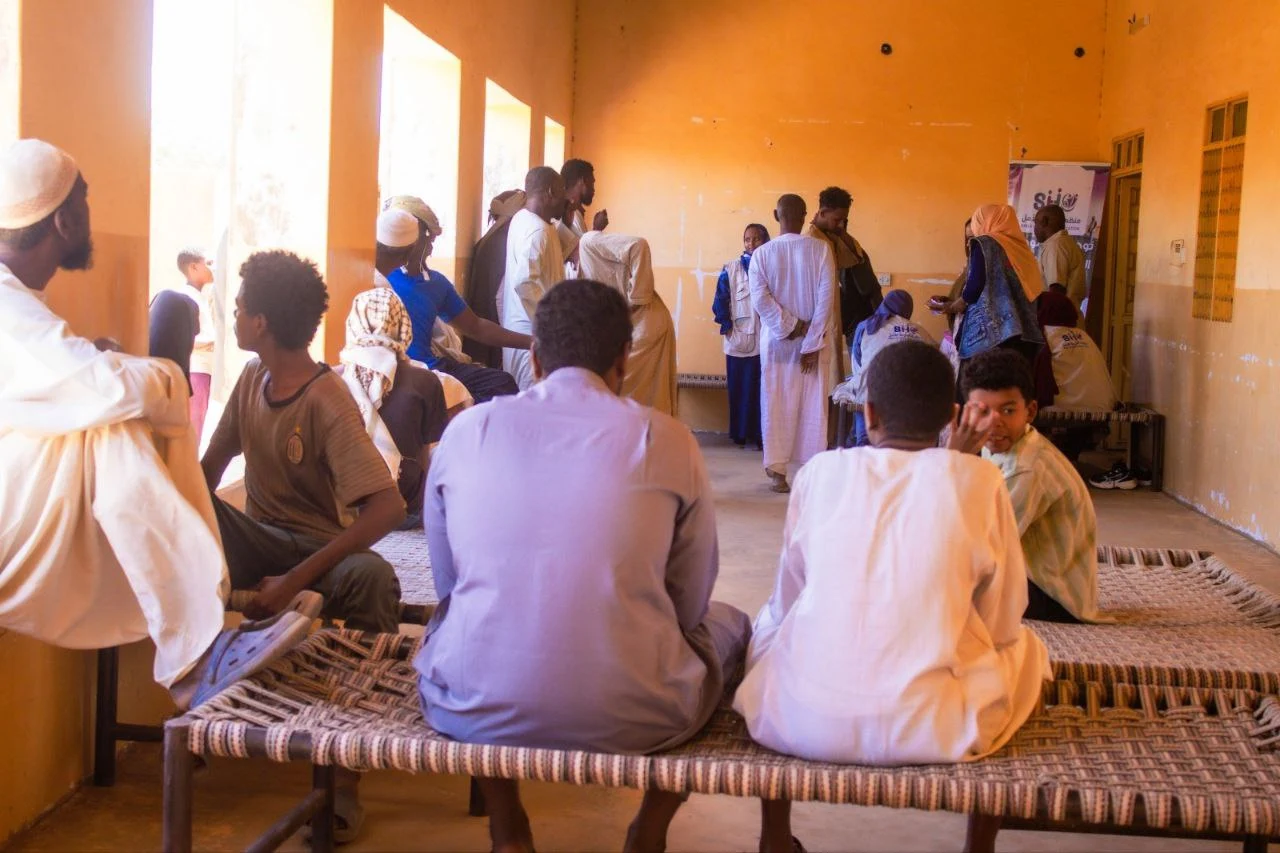
Its First Half 2026 Impact Report records free medical days among the activities implemented through its local partnership with Sails of Hope, with the aim of bringing basic healthcare closer to vulnerable communities.
This type of community-based support has a specific role.
It does not replace hospitals, specialist treatment or Sudan’s wider healthcare system.
But in communities where cost, displacement, distance and disruption make healthcare harder to reach, local medical activities can help reduce some barriers to basic care.
That distinction is important.
Sudan needs emergency medical outreach today, but it also needs functioning clinics, hospitals, laboratories, pharmacies, referral networks and trained health workers for the future.
A Health System Is More Than Its Hospitals
It is tempting to measure Sudan’s healthcare crisis by counting damaged or closed facilities.
Those numbers matter.
But they do not capture the full impact.
A clinic closing can mean that a pregnant woman loses access to antenatal care.
A child misses a vaccination.
A person with diabetes runs out of medicine.
A malaria patient is treated too late.
A malnourished child is not screened.
An outbreak is detected later.
A neighbouring hospital receives even more patients.
A family must spend scarce money travelling farther in search of care.
These consequences accumulate.
That is why healthcare-system disruption can continue causing harm even in communities not experiencing active fighting at that moment.
What Sudan’s Healthcare Crisis Tells Us
Sudan’s healthcare emergency is not simply a story of damaged buildings.
It is a crisis of access, continuity and capacity.
In 2026, millions of people lack reliable access to health services while disease outbreaks, malnutrition and displacement increase the need for those same services.
The remaining healthcare workers and functioning facilities continue to provide extraordinary levels of care under difficult conditions.
Humanitarian organizations are supporting primary healthcare, vaccination, medicines, nutrition treatment, mobile clinics and outbreak response.
Local organizations are helping bring services closer to communities.
But none of these efforts removes the need to protect healthcare itself.
Health facilities must be safe.
Health workers must be protected.
Medicines and supplies must be able to reach communities.
Humanitarian organizations must have safe access.
And funding must be sufficient to keep essential services operating.
Because when a clinic closes, what disappears is not simply a building.
A community loses one of the systems designed to keep people alive before illness becomes an emergency.
Supporting Healthcare Access in Sudan
Amel Foundation supports humanitarian programmes in Sudan, including community-based healthcare activities delivered through trusted local implementation.
Learn more about Amel Foundation’s work at AmelFoundation.org.

Comments are closed