
Updated: August 2026
For a young child, malnutrition is never simply a matter of being hungry.
It can weaken the immune system, reduce the body’s ability to recover from illness, interfere with growth and development, and make otherwise treatable childhood diseases far more dangerous.
For children who have been displaced by Sudan’s conflict, those risks can become even greater.
Displacement can separate families from their homes, farms, livelihoods, healthcare facilities, clean water sources and regular food supplies. Families may arrive in overcrowded settlements or host communities already struggling to meet basic needs. Children may then face food shortages at the same time as diarrhoea, malaria, measles or other illnesses — creating conditions in which nutritional status can deteriorate quickly.
Sudan is already facing an extreme child nutrition emergency.
The latest IPC analysis estimates that around 825,000 children under five are expected to suffer from severe acute malnutrition in Sudan during 2026. That is approximately 7% higher than in 2025 and 25% above pre-conflict levels recorded between 2021 and 2023.
Understanding why displaced children are particularly vulnerable helps explain why responding to malnutrition requires much more than food alone.
What Is Acute Malnutrition?
Malnutrition is a broad term covering different forms of poor nutrition.
One important form in humanitarian emergencies is wasting, also known as acute malnutrition.
A child who is wasted has a low weight for their height, generally reflecting recent and serious weight loss or failure to gain weight appropriately.
Wasting can result from inadequate food intake, disease, or a combination of the two.
The World Health Organization explains that children who are moderately or severely wasted face an increased risk of death. Infection can contribute directly to wasting, while malnutrition itself can weaken immunity and make infections more dangerous.
The most dangerous form is severe acute malnutrition, often shortened to SAM.
WHO identifies severe acute malnutrition in young children through indicators including very low weight-for-height, very low mid-upper arm circumference, or nutritional oedema. Children with SAM require urgent nutritional care, and those with medical complications may require inpatient treatment.
This distinction matters.
A child experiencing food insecurity is not automatically severely acutely malnourished. Likewise, providing a household with food assistance is not the same as medically treating a child with SAM.
They are connected problems, but they require different responses.
How Large Is Sudan’s Child Malnutrition Crisis in 2026?
Sudan’s child nutrition crisis has reached an extraordinary scale.
The May 2026 joint warning from FAO, WFP and UNICEF estimated that 825,000 children under five would suffer from severe acute malnutrition during 2026.
Almost 100,000 children had already been admitted for treatment during the first three months of the year.
By the end of June, UNICEF and its partners reported screening 5.3 million children for acute malnutrition and treating 174,700 children suffering from severe acute malnutrition during the first half of 2026.
These figures sit within an even wider humanitarian emergency.
UNICEF reported that 33.7 million people in Sudan required humanitarian assistance in 2026, including 17.3 million children, while more than 9.1 million people were internally displaced.
The burden is not equal everywhere.
Some of the most extreme nutrition conditions have been recorded in areas affected by intense conflict, displacement and severe restrictions on humanitarian access.
In Um Baru in North Darfur, UNICEF reported a Global Acute Malnutrition rate of approximately 52.9% in early 2026 — an exceptionally severe level. UNICEF linked the situation to food insecurity, displacement and the collapse of basic services.
Why Does Displacement Increase the Risk?
When a family is displaced, a child does not lose only a house.
The family may lose the entire system that previously supported the child’s health.
That can include food production, employment, shops, relatives, community support, healthcare, vaccination services, safe water and sanitation.
For young children, several of these losses can occur at exactly the same time.
Families may lose regular access to food
Conflict can force families to leave farms, livestock, businesses, jobs and stored food behind.
Once displaced, they may depend on irregular income, humanitarian assistance, community support or local markets where prices have increased.
Families facing severe shortages may begin reducing the number or size of meals, buying cheaper foods, or reducing dietary diversity.
For adults, these strategies are already difficult.
For children whose bodies and brains are developing rapidly, prolonged shortages of energy, protein and micronutrients can be especially damaging.
Sudan’s wider food crisis compounds this risk. Nearly 19.5 million people were experiencing Crisis-level or worse acute food insecurity between February and May 2026, according to the latest nationwide IPC analysis.
Displaced households are therefore trying to rebuild access to food inside a country where food insecurity is already affecting around two in every five people.
Disease and Malnutrition Can Reinforce Each Other
One of the most dangerous aspects of child malnutrition is its relationship with infection.
A child may become malnourished partly because they do not have enough nutritious food.
But illness can then make the problem worse.
Diarrhoea, for example, can reduce nutrient absorption and cause fluid loss. Fever and infection can increase the body’s nutritional needs while reducing appetite. Repeated illness can contribute to weight loss.
At the same time, malnutrition weakens the immune system, making it harder for the body to fight infection.
WHO notes that undernutrition increases children’s vulnerability to infectious diseases including diarrhoea, measles, malaria and pneumonia. Wasting can also increase the severity and duration of infections.
This creates a dangerous cycle:
poor nutrition → weaker immunity → infection → reduced appetite or nutrient absorption → further nutritional deterioration.
For a severely malnourished child, breaking that cycle may require both therapeutic nutrition and medical treatment.
That is particularly important in Sudan, where multiple disease outbreaks have occurred alongside the nutrition crisis.
UNICEF reported continuing outbreaks of diseases including malaria, measles, dengue and hepatitis E during 2026, while displacement and limited access to essential services continued to increase children’s vulnerability.
Unsafe Water Makes the Nutrition Crisis Worse
Nutrition cannot be separated from water and sanitation.
A family may obtain food, but if a child repeatedly becomes ill from unsafe water or poor sanitation, their nutritional recovery can be undermined.
Displacement sites can face overcrowding, insufficient toilets, limited water supply and difficulty maintaining hygiene.
These conditions increase the risk of diarrhoeal disease and other infections.
In Darfur, the pressure is particularly visible.
UNICEF reported that in displacement sites in Tawila, many families were receiving only around eight to nine litres of water per person per day, leaving very little after drinking and cooking for washing and hygiene.
The relationship is therefore direct:
food, clean water, sanitation, healthcare and nutrition are interconnected parts of child survival.
This is why humanitarian nutrition responses are often integrated with WASH and healthcare rather than delivered as isolated programmes.
Children Have Less Room for Nutritional Shock
Young children are especially vulnerable because their nutritional needs are high relative to their body size.
They are growing quickly.
Their brains and immune systems are developing.
They also have smaller physical reserves than adults.
A period of poor food intake or illness that an adult might survive without immediate visible consequences can cause a young child’s nutritional condition to deteriorate much more rapidly.
WHO describes wasting as an immediate and life-threatening form of undernutrition. Children affected by wasting have weakened immunity and greater vulnerability to disease and death.
For displaced children, repeated disruption can intensify that vulnerability.
A family may flee once, reach temporary safety, and then be forced to move again.
Every movement can disrupt access to food, breastfeeding support, healthcare, vaccination, nutrition screening and treatment.
A child already recovering from malnutrition may therefore lose access to the programme or clinic supporting that recovery.
Displacement Can Interrupt Nutrition Treatment
Severe acute malnutrition is treatable.
But treatment has to reach the child.
Children without serious medical complications can often receive specialized therapeutic foods and regular monitoring through community or outpatient nutrition programmes.
Children with complications may require treatment in a health facility.
WHO guidance emphasizes both specialized feeding and medical management where necessary.
The challenge in a conflict setting is continuity.
A therapeutic feeding programme may exist, but insecurity can make roads unsafe.
A health facility may be functioning, but displaced families may be too far away to reach it.
Supplies may be available elsewhere in the country but unable to cross conflict lines.
WHO reported in April 2026 that around 21 million people in Sudan lacked access to health services, with ongoing conflict continuing to damage and disrupt the health system.
In areas such as North Darfur, UNICEF has had to move health, nutrition and WASH supplies across conflict lines to reach children living under siege-like conditions.
For a child with SAM, delays can be dangerous.
Nutrition Screening Can Find Problems Before They Become Worse
One of the most important humanitarian tools is also one of the simplest: identifying malnutrition early.
Nutrition teams frequently screen young children using measurements such as mid-upper arm circumference, commonly called MUAC.
WHO recommends MUAC and other appropriate measurements for identifying severe acute malnutrition in children between 6 and 59 months of age.
Screening allows health and nutrition workers to identify children who need further assessment or treatment.
This is why the millions of screenings reported by UNICEF in Sudan matter.
By the end of June 2026, UNICEF and partners had screened 5.3 million children for acute malnutrition.
But screening only works when families can be reached — and when treatment is available afterwards.
In inaccessible communities, both parts become harder.
Food Assistance Matters, but It Is Not the Same as Nutrition Treatment
A comprehensive response to Sudan’s nutrition crisis requires several different forms of support.
Household food assistance can help families meet basic food needs.
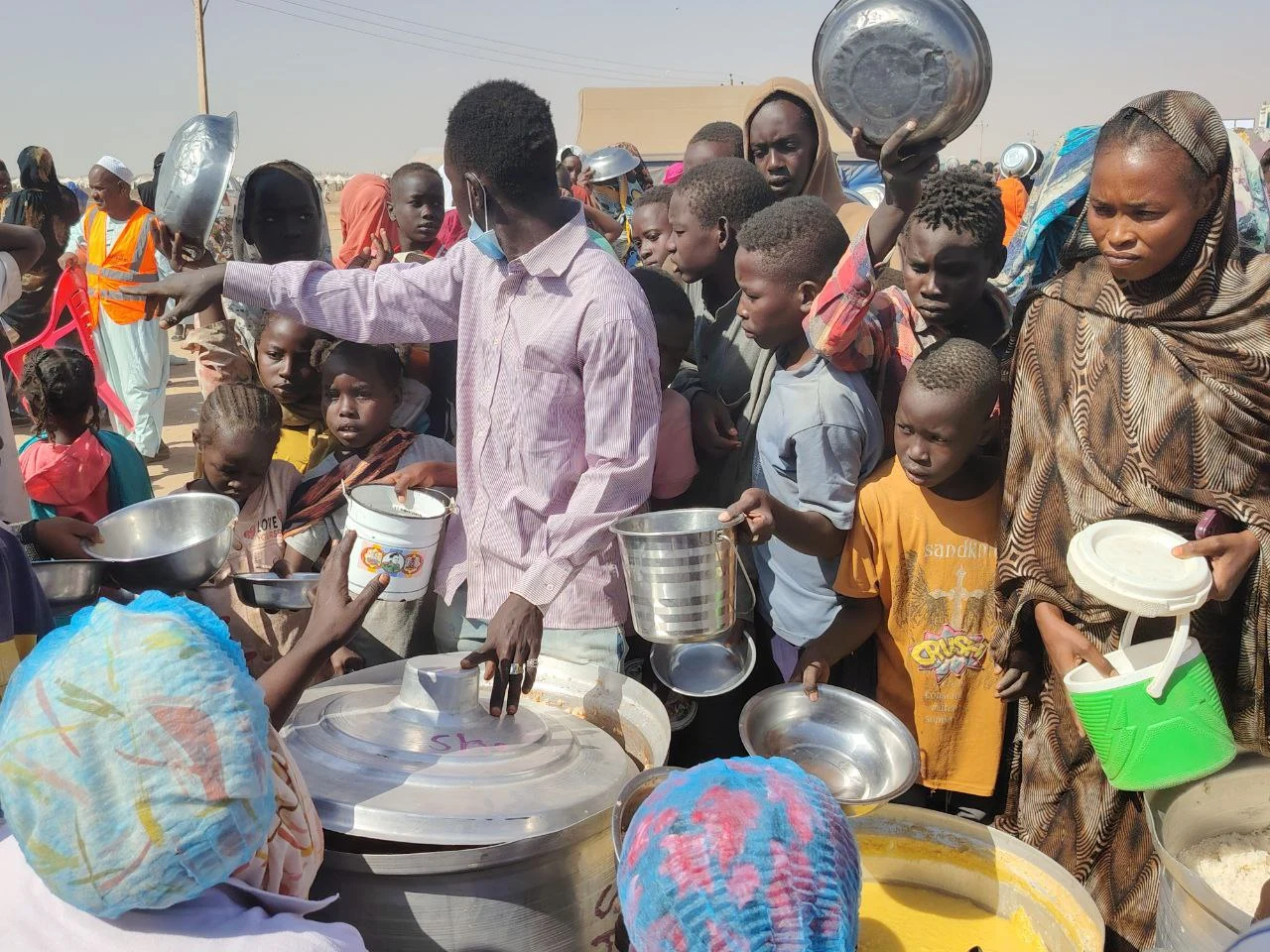
Community kitchens can provide cooked meals to people who have lost reliable access to cooking facilities.
Clean water and sanitation can reduce disease risks.
Primary healthcare can help identify and treat illness.
Nutrition screening can identify children who are becoming acutely malnourished.
And children with moderate or severe acute malnutrition may need specialized therapeutic nutrition and medical care.
These interventions support one another, but they should not be confused.
A regular meal programme, for example, can be extremely valuable for a displaced family without reliable food access. But it should not be described as medical treatment for severe acute malnutrition unless the programme is specifically designed and clinically managed for that purpose.
Maintaining that distinction is important both medically and humanitarianly.
How Amel Foundation’s Work Connects to the Wider Risk
Amel Foundation’s documented 2026 programmes address several of the conditions that can increase vulnerability among displaced and crisis-affected families, including food access, water and basic healthcare.
In the first half of 2026, Amel Foundation recorded 87,000 meals provided through community kitchens, alongside 2,355 Ramadan food baskets reaching 14,130 beneficiaries.
The Foundation’s first-half reporting also recorded 3,600 WASH beneficiaries, including 3,000 people reached through water-well support, and 1,082 health beneficiaries through its healthcare activities.
These programmes should not be presented as a substitute for specialized treatment of severe acute malnutrition.
Their relevance is broader.
For families facing displacement, access to food, safe water and basic healthcare can reduce some of the pressures that contribute to nutritional vulnerability, while specialized humanitarian health and nutrition actors provide screening and therapeutic care for children requiring treatment.
Amel Foundation reports that its activities in Sudan are implemented through trusted local partnership with Sails of Hope.
Why an Integrated Response Matters
A malnourished child cannot be considered separately from the environment around them.
Treating severe wasting without addressing unsafe water may leave the child repeatedly exposed to disease.
Providing food without restoring access to healthcare can leave infections untreated.
Providing medical services without ensuring that displaced families can reach them may still leave the most vulnerable children behind.
This is why humanitarian agencies increasingly describe nutrition as part of a wider system involving food security, health, WASH, maternal nutrition, infant and young-child feeding, protection and humanitarian access.
Sudan demonstrates that connection with painful clarity.
Conflict displaces families.
Displacement disrupts food and healthcare.
Poor WASH conditions increase disease.
Disease contributes to nutritional deterioration.
Malnutrition then makes children less able to survive those same illnesses.
Breaking that cycle requires several interventions working together.
What Sudan’s 2026 Malnutrition Data Is Telling Us
The estimate of 825,000 children under five expected to suffer severe acute malnutrition in 2026 should not be read as just another large humanitarian statistic.
Behind it are children whose bodies have reached a level of nutritional vulnerability that can become life-threatening without appropriate treatment.
The danger is especially severe among displaced children because displacement can remove many of the protections a child normally depends on at once: regular food, clean water, shelter, healthcare, community support and continuity of care.
Sudan’s nutrition emergency therefore cannot be solved by one type of intervention.
Preventing child malnutrition requires families to have enough nutritious food.
Treating acute malnutrition requires screening and specialized nutrition services.
Protecting a child’s recovery requires clean water, sanitation and healthcare.
And sustaining all of those services requires safe humanitarian access to communities affected by conflict and displacement.
The more these systems collapse together, the more dangerous malnutrition becomes.
And the earlier children can be reached, screened and treated, the greater the chance that a preventable nutritional crisis does not become a life-threatening one.
Supporting Families Affected by Sudan’s Humanitarian Crisis
Amel Foundation supports humanitarian programmes in Sudan across food assistance, water, healthcare and other essential needs through local implementation.
Learn more about Amel Foundation’s work at AmelFoundation.org.

Comments are closed