
 Are you ready to help?
When people think of wealth, they often imagine abundance, money, property, comfort. But in Sudan, where millions face displacement, hunger, and loss, wealth has taken on a new meaning. True wealth is not measured in possessions, but in compassion, community, and the strength to keep going when everything else is gone.
According to UN News, Sudan’s humanitarian emergency has reached “unprecedented levels,” with over 30 million people now in urgent need of assistance. In such a reality, wealth becomes synonymous with survival, having food to share, clean water to drink, or a safe place to sleep.
When Wealth Becomes Humanity
In times of great suffering, humanitarian aid becomes the purest form of wealth. Every meal distributed, every medicine delivered, every displaced child comforted represents an investment in human life. Through its Emergency Relief Projects, Amel Foundation embodies this philosophy; transforming donations into lifelines for families across Sudan.
To the mother who receives a bag of flour and a bottle of oil, wealth is the ability to feed her children for one more day. To the father who finds a mobile clinic treating his sick son, wealth is restored. Each act of giving, no matter how small, is a reminder that wealth can heal, not just accumulate.
The Human Face of Poverty Relief
Behind every statistic of poverty relief lies a face, a story, and a beating heart. The crisis in Sudan has driven millions to the brink of famine, yet amid this hardship, the human spirit remains unbroken. According to World Vision’s Sudan Crisis Report, hunger is now the most urgent threat, with families surviving on one meal every two days.
At Amel Foundation’s Food Security Program, relief is not just about giving food, it’s about restoring dignity. Volunteers distribute hot meals in conflict-affected areas, empowering local communities to take part in the process. This form of poverty relief creates a cycle of hope: those who receive today often return to serve tomorrow.
Economic Empowerment: Wealth That Lasts
True wealth endures when it creates opportunity rather than dependency. Economic empowerment is a cornerstone of sustainable humanitarian response. It means equipping people with the skills, tools, and confidence to rebuild their own futures.
Through its Training and Development Initiatives, Amel Foundation provides vocational education to displaced youth and women. These programs teach practical skills—tailoring, carpentry, basic IT that help restore livelihoods disrupted by war. As families regain income, they also regain autonomy, a sense of control over their destiny.
Empowerment turns donors into partners and beneficiaries into change-makers. It ensures that wealth flows not just into communities, but through them, creating cycles of resilience.
The Ripple Effect of Global Giving
When the world gives, hope multiplies. The concept of global giving recognizes that wealth is most powerful when shared beyond borders. Every donation to a humanitarian cause in Sudan, whether from an individual, a business, or a charitable foundation has a ripple effect that can save lives and strengthen communities.
According to UNHCR, the generosity of global citizens has already helped deliver food, water, and medical care to millions. Yet funding gaps remain vast. The Amel Foundation works to bridge this divide by building trust between donors and those in need, offering full transparency on how every dollar turns into tangible relief.
Wealth, in this sense, becomes a tool for transformation not just a symbol of comfort.
Sustainable Development: Building Beyond Emergency
Relief alone cannot rebuild a nation. That’s why the Amel Foundation’s mission extends beyond immediate aid to focus on sustainable development projects that secure long-term well-being. Initiatives in clean water, healthcare, and education are laying the groundwork for a healthier, more stable Sudan.
In its Water Access Projects, for example, Amel installs solar-powered pumps that provide clean, consistent water sources in remote areas. These solutions reduce waterborne diseases, strengthen agricultural productivity, and empower women who once walked miles daily just to fetch water.
Sustainability transforms emergency aid into a foundation for renewal. It turns survival into progress, ensuring that communities are not just saved—but strengthened.
Financial Resilience: Preparing for Tomorrow
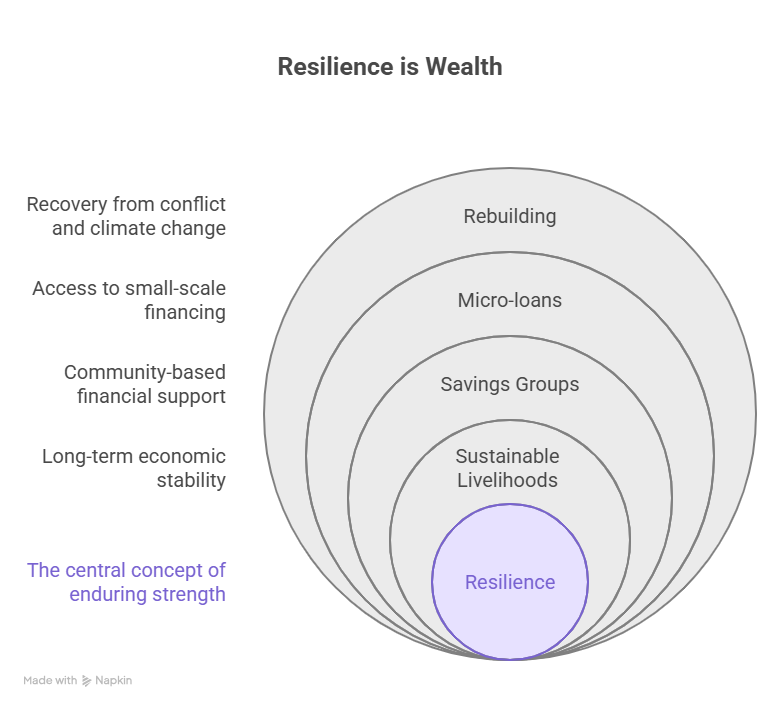
Crisis teaches one of life’s hardest lessons: wealth without resilience is fragile. In Sudan, where conflict and climate change have upended daily life, families must learn to adapt and rebuild repeatedly. Financial resilience means creating systems that allow individuals and communities to recover from shocks whether through micro-loans, savings groups, or sustainable livelihoods.
Resilience is a form of wealth that can’t be stolen. It is carried in the mind, shared in the heart, and passed to the next generation.
The Social Impact of Compassion
Every act of compassion has a measurable social impact. It strengthens the moral and emotional wealth of entire communities. When one child is educated, the community grows wiser. When one woman learns a trade, a family gains stability. When one well is built, a village thrives.
In Sudan’s hardest-hit regions, Amel’s volunteers witness this transformation daily. Aid is no longer charity, it becomes solidarity. It restores not only bodies but trust. Each initiative builds social wealth: networks of care, collaboration, and shared purpose that outlast any crisis.
Why the World Must Rethink Wealth
Sudan’s crisis is not just a humanitarian emergency; it is a moral mirror. It asks the world what kind of wealth truly matters. In an age of inequality and abundance, the Sudanese people remind us that the richest are those who give when they have little left to give.
According to the UN Office for the Coordination of Humanitarian Affairs (OCHA), global humanitarian appeals for Sudan remain underfunded by over 70%. The gap between potential and action reflects a larger truth: humanity’s wealth is not in its resources, but in its willingness to share them.
If every person with the means to give contributed even a fraction of their wealth, countless lives could be saved, and communities could rise again from the ashes of
Amel Foundation: A Bridge Between Hope and Humanity
At the heart of this global effort stands the Amel Foundation, a charitable foundation built on compassion, credibility, and community partnership. From distributing emergency food parcels to leading healthcare and training programs, Amel’s mission is simple: to restore dignity through action.
Every donation -whether small or large- translates directly into tangible change. The Our Donations page shows how individual generosity fuels Amel’s impact, turning financial contributions into meals, medicines, and safe shelters. The foundation’s transparent reporting and locally driven model ensure that wealth reaches the people who need it most.
Amel doesn’t just deliver aid—it delivers hope.
Conclusion: Redefining True Wealth
In Sudan’s fields, schools, and shelters, wealth is being redefined every day. It is found not in abundance but in generosity; not in what we keep, but in what we share. As the Sudanese people rebuild their lives amid unimaginable hardship, they remind the world that true wealth is the power to heal, empower, and endure.
By supporting organizations like the Amel Foundation, individuals and institutions become part of a greater legacy—one that measures wealth not in dollars, but in dignity restored and lives renewed.
In this new definition of wealth, giving is not an act of loss. It is the richest investment one can make in humanity’s shared future.

Comments are closed