
A Crisis the World Cannot Ignore
Sudan is facing one of the most severe humanitarian emergencies in the world today. More than half of the population now depends on aid to survive, with millions displaced from their homes and entire communities struggling to access food, water, and healthcare. According to the United Nations Office for the Coordination of Humanitarian Affairs, over 33 million people are in urgent need of assistance, making this crisis both vast and deeply complex.
In this context, qurban is no longer just a religious ritual. It has become a vital source of survival for families who have lost everything. As Eid al-Adha approaches, the importance of a simple qurban donation carries life-saving weight. What was once a celebration of generosity is now a direct response to hunger, displacement, and the breakdown of essential systems.
Qurban 2026: A Turning Point
The year qurban 2026 represents a critical moment for Sudan. With famine conditions reported in several regions, including Darfur and Kordofan, the coming months will determine whether millions can endure the lean season ahead. The World Health Organization has warned of escalating malnutrition and disease outbreaks linked to food shortages and poor living conditions.
For many families, the opportunity to distribute qurban meat may be the only time in the entire year when they receive protein-rich food. This makes Eid al-Adha charity efforts not just meaningful, but essential. Without immediate support, the gap between survival and loss grows dangerously thin.
Beyond Ritual: Qurban as a Lifeline
The Hidden Hunger Crisis
Hunger in Sudan is not always visible, but it is widespread and severe. Children, in particular, are suffering the most. UNICEF estimates that hundreds of thousands of children are facing acute malnutrition, which weakens their immune systems and puts them at risk of preventable diseases. In these conditions, access to nutritious food becomes a matter of life or death.
Qurban meat provides high-quality protein that is rarely available in crisis settings. When families receive meat during Eid, it helps restore strength, support recovery, and improve overall health. This is why many humanitarian aid Sudan programs now integrate qurban for Sudan as part of their emergency response strategies.
Reaching the Most Vulnerable
Delivering food in Sudan is not simple. Many of the hardest-hit areas are difficult to access due to conflict, damaged infrastructure, and administrative barriers. Yet, these are the places where support is needed most. Local networks and community-based efforts have become essential in ensuring that aid reaches isolated families.
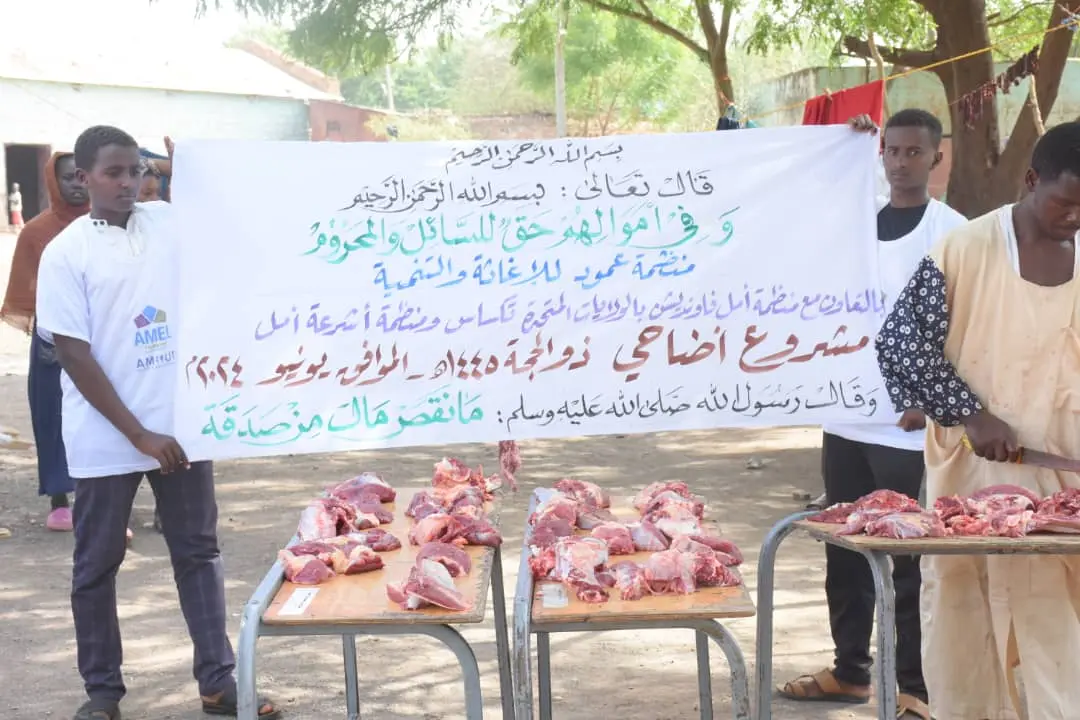
Organizations working on the ground, including initiatives like the AMEL Foundation emergency programs, rely on trusted local partners to deliver aid directly. These efforts ensure that qurban donation initiatives are targeted, effective, and responsive to real needs on the ground.
The Logistics of Delivering Qurban
Challenges in a Conflict Zone
Sudan’s ongoing conflict has created significant challenges for humanitarian operations. Markets have collapsed, livestock has been lost or displaced, and transport routes are often unsafe. According to UNICEF Sudan, access constraints continue to limit the delivery of essential services, including food distribution.
Despite these barriers, local teams continue to find ways to distribute qurban meat safely. They navigate insecurity, coordinate with communities, and adapt to rapidly changing conditions. Their work ensures that sacrifice donation efforts are not delayed, even in the most difficult environments.
Paying for Qurban in a Broken Economy
Sudan’s banking system has largely collapsed, making financial transactions extremely difficult. Many people now rely on informal networks to send and receive funds. For those looking to donate qurban online, trusted organizations play a key role in managing these challenges and ensuring that funds are used effectively.
This is where ethical qurban donation becomes critical. Donors must choose organizations that have the experience and local presence needed to operate in complex environments. Transparency, accountability, and community trust are essential to making sure that every donation has real impact.
Displacement and the Loss of Home
Eid in Displacement Camps
For millions of Sudanese families, Eid is no longer celebrated at home. Instead, it takes place in overcrowded camps where resources are limited and living conditions are harsh. Families who once prepared meals together now rely on shared spaces and communal support to mark the occasion.
In these settings, the arrival of qurban meat brings a sense of dignity and hope. It allows families to maintain cultural and religious traditions, even in the face of immense hardship. It also reinforces a sense of community, reminding people that they are not alone.
The Strength of Solidarity
Sudanese communities, both inside and outside the country, continue to show remarkable resilience. Diaspora groups are organizing collective efforts to support those in need, pooling resources to maximize impact. Instead of individual sacrifices, many are now supporting shared kitchens and community distributions.
This shift reflects a broader understanding of what qurban means in times of crisis. It is not only about fulfilling a religious obligation, but about supporting vulnerable families in the most meaningful way possible. It is a collective act of care and responsibility.
The Role of Local Responders
Emergency Response Rooms: A Lifeline
Local groups, often referred to as Emergency Response Rooms, have become the backbone of humanitarian efforts in Sudan. These community-led initiatives are able to operate in areas where larger organizations cannot. They understand the local context, build trust quickly, and respond with speed and flexibility.
Their role in distributing qurban meat is especially important. They ensure that aid reaches families who might otherwise be overlooked. By working closely with communities, they help maintain fairness and transparency in distribution.
More Than Food: Restoring Humanity
Qurban is not just about nutrition. It is also about restoring a sense of normal life in extraordinary circumstances. Community gatherings, shared meals, and moments of celebration all contribute to emotional well-being.
For families who have experienced trauma and loss, these moments are deeply meaningful. They provide comfort, connection, and a reminder of cultural identity. In this way, qurban becomes both a physical and emotional form of support.
Ethical Giving in Times of Crisis
Choosing the Right Approach
In a complex emergency like Sudan, how aid is delivered matters as much as what is delivered. Ethical qurban donation focuses on dignity, fairness, and sustainability. It ensures that resources are used responsibly and that communities are actively involved in the process.
Organizations like the AMEL Foundation qurban programs prioritize these values. They work to ensure that donations are distributed equitably and that local systems are strengthened rather than replaced.
Building Long-Term Impact
While qurban provides immediate relief, it can also contribute to longer-term resilience. By supporting local markets, engaging community leaders, and integrating with broader programs like food security initiatives, these efforts help communities recover and rebuild.
This approach recognizes that humanitarian aid is not just about responding to crises, but about preparing for the future. It connects short-term support with long-term solutions.
A Shared Responsibility
The crisis in Sudan requires a global response. While local communities continue to show resilience, they cannot face these challenges alone. International support is essential to bridge the growing gap between needs and available resources.
Donors, organizations, and policymakers all have a role to play. By choosing to donate qurban online through trusted channels, individuals can contribute to a larger effort to save lives and restore dignity. Every sacrifice donation becomes part of a collective response to one of the world’s most urgent crises.
A Call to Act Now
As Eid al-Adha approaches, the urgency of this moment cannot be overstated. The window to provide meaningful support is closing, and the consequences of inaction are severe. Families across Sudan are waiting, hoping, and relying on the generosity of others.
Qurban is an act of faith, but in Sudan today, it is also an act of survival. It feeds the hungry, supports the vulnerable, and strengthens communities under pressure. Through thoughtful and ethical qurban donation, it is possible to make a real difference.The AMEL Foundation continues to stand alongside the people of Sudan, working to deliver aid where it is needed most. By joining this effort, donors can help ensure that this Eid brings not just sacrifice, but relief, dignity, and hope.

Comments are closed