
Updated: September 2026
For a country facing severe hunger, harvest season can sound like the beginning of relief.
Fields are harvested. Grain reaches markets. Food becomes more available. Farmers earn income. Prices may begin to ease.
But in Sudan in 2026, the relationship between harvest and hunger is far more complicated.
The country is approaching another major cereal harvest while millions of people continue to face severe food insecurity. At the same time, farmers have been working through conflict, displacement, high agricultural costs, shortages of essential inputs and difficult rainfall conditions.
FAO reported in September that planting for Sudan’s 2026 cereal season had been completed by mid-August, with harvesting expected to begin from November 2026. However, the organization warned of concerns over production because rainfall had been below average across many cropping areas, while insecurity and shortages of agricultural inputs continued to affect farmers.
The harvest therefore matters enormously.
But it should not be treated as a simple answer to Sudan’s hunger crisis.
A successful harvest can increase the amount of food available.
It cannot by itself guarantee that families will be able to afford that food, reach markets safely or recover livelihoods lost during years of conflict.
Understanding that difference is essential to understanding Sudan’s food-security outlook for the end of 2026.
When Is Sudan’s Main Harvest Season?
Sudan produces several important cereal crops, including sorghum, millet and wheat.
Sorghum is particularly important as a major staple food and an important crop for farming households and national markets.
The country’s main rain-fed cereal season generally depends on rains between June and September.
Farmers plant during the rainy season, while harvesting of major 2026 cereal crops is expected to begin from November.
Wheat follows a different cycle and is largely produced through irrigation, with the smaller wheat harvest generally occurring later.
FAO reported that planting of Sudan’s 2026 cereal crops was completed around mid-August. The organization is currently monitoring conditions ahead of the harvest because rainfall, agricultural inputs and insecurity have all created concerns about how much food farmers will ultimately produce.
That makes the final months of 2026 particularly important.
They will help determine how much locally produced cereal enters Sudanese markets and how much pressure continues to fall on imports and humanitarian assistance.
Why Rainfall Matters So Much
Much of Sudanese agriculture depends directly on seasonal rainfall.
If rain begins too late, seeds may not germinate properly.
If rainfall is too limited after planting, crops may struggle to establish.
If long dry periods occur during important stages of crop development, yields can fall even if rain eventually returns.
In its September 2026 assessment, FAO said cumulative rainfall during the June–September rainy season had been below average across much of Sudan’s cropping areas.
Some of the most important agricultural regions were particularly affected.
In Sennar, cumulative rainfall between June and mid-August was around 20 percent below the long-term average.
In Gedaref, it was approximately 30 percent below average.
Together, those two states normally account for roughly one-quarter of Sudan’s national sorghum production.
These rainfall deficits do not automatically mean the harvest will fail.
Agricultural production depends on many factors, including what happens during the remaining growing period, the type of crop, planting date and local conditions.
But they create another layer of uncertainty for a food system already under extraordinary pressure.
Sudan’s Farmers Are Facing More Than a Weather Problem
Rainfall is only one part of the story.
Even perfect weather cannot produce a strong harvest if farmers cannot plant enough land.
Conflict has disrupted Sudan’s agricultural system in several ways.
Farmers may be displaced from their land.
Agricultural machinery can become unavailable or expensive to operate.
Fuel prices can rise.
Transport routes may be disrupted.
Seeds, fertilizer and other farming inputs may become difficult to purchase.
Credit may disappear.
Markets where farmers previously bought supplies or sold crops may no longer function normally.
FAO identifies insecurity and persistent agricultural-input shortages alongside dry weather as the main concerns affecting the 2026 cereal season.
This is an important distinction.
Sudan’s agricultural crisis is not simply the result of rainfall.
It is the result of weather conditions acting on top of a food system already weakened by years of conflict and economic disruption.
What Happened to Sudan’s 2025 Harvest?
The previous harvest shows how serious those pressures can become.
Sudan produced approximately 5.2 million tonnes of cereals in 2025, according to a government-led Crop and Food Supply Assessment supported by FAO.
That was around:
● 22 percent lower than 2024, and
● 19 percent below the previous five-year average.
The assessment identified conflict-related disruption of agricultural activities and supply chains, including reduced availability and higher prices for important agricultural inputs, among the main reasons for the decline.
This matters going into the 2026 harvest.
A weaker previous harvest means households and markets enter the next season with fewer reserves.
Farmers who earned less from the previous season may also have fewer resources available to invest in seeds, fuel, equipment and labour.
One difficult agricultural year can therefore weaken the ability to cope with the next one.
Will the 2026 Harvest Reduce Hunger?
It could help.
But the answer depends on where a family lives and why that family is hungry.
A stronger harvest can increase food availability.
It can allow farming households to consume part of their own production.
It can provide income when farmers sell crops.
And when larger quantities of grain reach markets, greater supply can sometimes reduce pressure on prices.
But none of those outcomes is guaranteed.
A household that has been displaced from its land may not benefit directly from the harvest.
A family without income may still be unable to purchase grain even if markets are better supplied.
A community cut off by insecurity may not receive food produced elsewhere.
A farmer may produce a crop but struggle to transport it to market.
And households that have already sold assets, lost livelihoods or accumulated debt may need more than one agricultural season to recover.
This is why food availability and food access are not the same thing.
Sudan can produce food while millions of people remain hungry.
Why Food Prices Matter Almost as Much as Production
For families who purchase most of their food, the number that matters may not be national cereal production.
It may be the price of one sack of sorghum in the local market.
FAO’s September 2026 country assessment describes cereal prices in Sudan as remaining at exceptionally high levels.
That has major consequences.
Imagine that more grain becomes available after harvest but a household has lost its income.
Food technically exists.
But the family still cannot access enough of it.
This is one reason economists and humanitarian organizations distinguish between the availability of food and people’s economic access to it.
Conflict can damage both at once.
Agricultural disruption reduces supply.
Economic collapse reduces purchasing power.
Transportation costs affect market prices.
Displacement removes people from livelihoods.
The result is a food crisis that cannot be solved only by producing additional grain.
A Harvest Does Not Reach Every Part of Sudan Equally
National production statistics can also hide enormous geographic differences.
Sudan is a large country.
Agricultural conditions vary significantly between states.
So do security conditions, market access and levels of displacement.
A relatively good harvest in one producing area does not automatically improve food access in an isolated community hundreds of kilometres away.
Grain has to move.
Roads have to function.
Traders have to operate.
Transport needs fuel.
Markets need to remain accessible.
Families need money.
And humanitarian access may still be necessary for communities that cannot meet their needs through markets.
When any of those links break, food can exist in one part of the country while people experience severe hunger elsewhere.
Could Harvest Season End the Risk of Famine?
Current evidence says that should not be assumed.
FAO and WFP warned in June that the risk of Famine identified in parts of Sudan could continue even during the harvest period.
Their Hunger Hotspots assessment identified a risk of Famine in 14 areas across North Darfur, South Darfur and South Kordofan through September 2026.
The organizations warned that this risk was expected to persist in 13 areas through the harvest period and into January 2027.
This does not mean that all 13 areas have been classified as being in Famine.
The distinction matters.
A Famine classification requires specific evidence and thresholds.
A risk of Famine means conditions could deteriorate to that level under plausible circumstances, such as worsening conflict, loss of humanitarian access or further disruption to food supplies.
But the fact that risk is expected to continue into the harvest season shows why the arrival of new crops should not be treated as an automatic end to the emergency.
What Do the Latest Hunger Numbers Tell Us?
The most recent nationwide IPC assessment estimated that nearly 19.5 million people approximately 41 percent of Sudan’s population were facing Crisis-level or worse acute food insecurity between February and May 2026.
That included:
● more than 14 million people in IPC Phase 3 Crisis;
● more than 5 million in IPC Phase 4 Emergency; and
● around 135,000 in IPC Phase 5 Catastrophe.
Conditions were expected to worsen during the June–September lean season in many of the highest-risk areas.
However, there is an important limitation to the later projections.
While the February–May analysis covered the entire country, IPC’s projections for June–September and October 2026–January 2027 cover only 56 localities and IDP settlements representing roughly 8.3 million people because sufficient data was not available for a complete nationwide analysis.
That means later projection totals should not be interpreted as Sudan-wide hunger estimates.
It also means we should be cautious about making strong predictions for the entire country before new nationwide data becomes available.
The Lean Season and Harvest Season Are Very Different
The months before harvest are often among the hardest for farming households.
Food stored from the previous season may be running low.
Market prices can rise.
Families may spend more of their income on food.
At the same time, farmers are investing labour and resources into crops that have not yet been harvested.
This period is commonly known as the lean season.
The harvest changes that dynamic.
Households begin receiving food directly from their fields.
Farmers can sell crops.
Market supply can improve.
This can produce seasonal improvements in food security.
But Sudan’s current crisis is severe enough that the normal seasonal cycle has been disrupted.
For some families, there is no farm left to harvest.
For others, land may be inaccessible.
Some households have been displaced into states where they have no agricultural assets.
Others may return home after planting opportunities have already passed.
So while harvest season remains important nationally, its benefits are distributed very unevenly.
What About Sudan’s Need for Imported Food?
Sudan also depends on food imports, particularly for wheat.
FAO forecasts cereal import requirements of around 2.8 million tonnes for the 2026 marketing year, with wheat representing most of that amount.
This matters because domestic production is only one part of the country’s food supply.
Imported food depends on:
● international prices;
● shipping and transport;
● fuel costs;
● exchange rates;
● functioning ports and trade routes;
● local distribution networks; and
● people’s ability to purchase imported products.
WFP has warned more broadly in September that disruptions affecting international trade routes can increase the cost of food, fuel and fertilizer, with particularly serious consequences for countries already facing food insecurity.
A stronger Sudanese harvest can reduce some pressure on markets.
It cannot completely remove the country’s exposure to wider economic and trade conditions.
Supporting Agriculture Is Different From Distributing Food
When families are already hungry, emergency food assistance can be essential.
But helping Sudan produce food requires a different kind of humanitarian and recovery response.
Farmers may need:
● quality seeds;
● farming tools;
● fertilizer where appropriate;
● access to land;
● animal health services;
● irrigation support;
● fuel;
● storage;
● functioning markets;
● transportation; and
● access to financing.
FAO’s 2026 Sudan response includes crop, livestock and fisheries interventions intended to protect food production and agricultural livelihoods alongside immediate humanitarian assistance.
This illustrates a broader principle.
Food assistance helps people eat today.
Agricultural support helps communities preserve their ability to produce food tomorrow.
Sudan needs both.
Livestock Also Matters to Sudan’s Food Security
Agriculture in Sudan is not limited to crops.
Livestock is central to livelihoods for many pastoral and agropastoral households.
Animals provide income, food and assets that households can use during difficult periods.
But livestock systems can also be damaged by conflict, displacement, lack of veterinary services, reduced grazing access, high feed costs and water shortages.
FAO has continued supporting livestock health and feed interventions for vulnerable pastoral and agropastoral communities in Sudan during 2026.
Protecting animals matters because food security is ultimately about household livelihoods, not only cereal production.
A family that loses its animals may lose both food and its main source of income.
Why Farmers Need Support Before the Next Crisis
Emergency humanitarian assistance often begins after a household is already in crisis.
Agricultural support can sometimes intervene earlier.
Seeds provided before planting season can help a household grow food.
Animal vaccinations can protect livestock before disease spreads.
Repairing irrigation can allow agricultural production to continue.
Supporting local markets can preserve livelihoods.
The timing matters.
A bag of food provided after harvest failure can save lives.
A bag of seed provided before planting can help prevent some households from reaching that point.
Neither intervention replaces the other.
They operate at different stages of the crisis.
What Should We Watch During Sudan’s 2026 Harvest?
The next several months will provide important evidence about where Sudan’s food crisis may be heading.
Five indicators will be especially important.
1. Final cereal production
How much sorghum, millet and other cereal is actually harvested?
The amount planted does not tell us the final yield.
2. Market prices
Do cereal prices begin to decline as new crops enter markets?
And if they do, are those reductions large enough to make food more affordable?
3. Humanitarian access
Can food and other assistance reach communities facing the highest levels of hunger?
4. Population movement
Are displaced families able to return to agricultural livelihoods, or are new waves of displacement continuing?
5. New IPC analysis
Updated food-security assessments will be essential for understanding whether conditions are improving, remaining severe or deteriorating.
Until those data are available, predictions about Sudan’s post-harvest food situation should remain cautious.
What the Harvest Cannot Fix by Itself
Sudan’s harvest can matter greatly.
But crops cannot repair a damaged health facility.
They cannot rebuild a destroyed water system.
They cannot reopen a blocked road.
They cannot return lost assets to a displaced family.
They cannot automatically restore income.
And they cannot replace humanitarian assistance for people living in areas where food remains inaccessible.
Food security is connected to many other systems.
A family needs more than grain.
It needs somewhere safe to live.
A source of income.
Accessible markets.
Clean water.
Healthcare.
Transportation.
And enough stability to plan beyond tomorrow.
This is why Sudan’s hunger crisis cannot be understood purely as an agricultural-production problem.
How Amel Foundation’s Food Security Work Fits Into the Wider Response
Amel Foundation identifies Food Security as one of its core humanitarian programme areas in Sudan, alongside water, healthcare, child support and other forms of assistance.
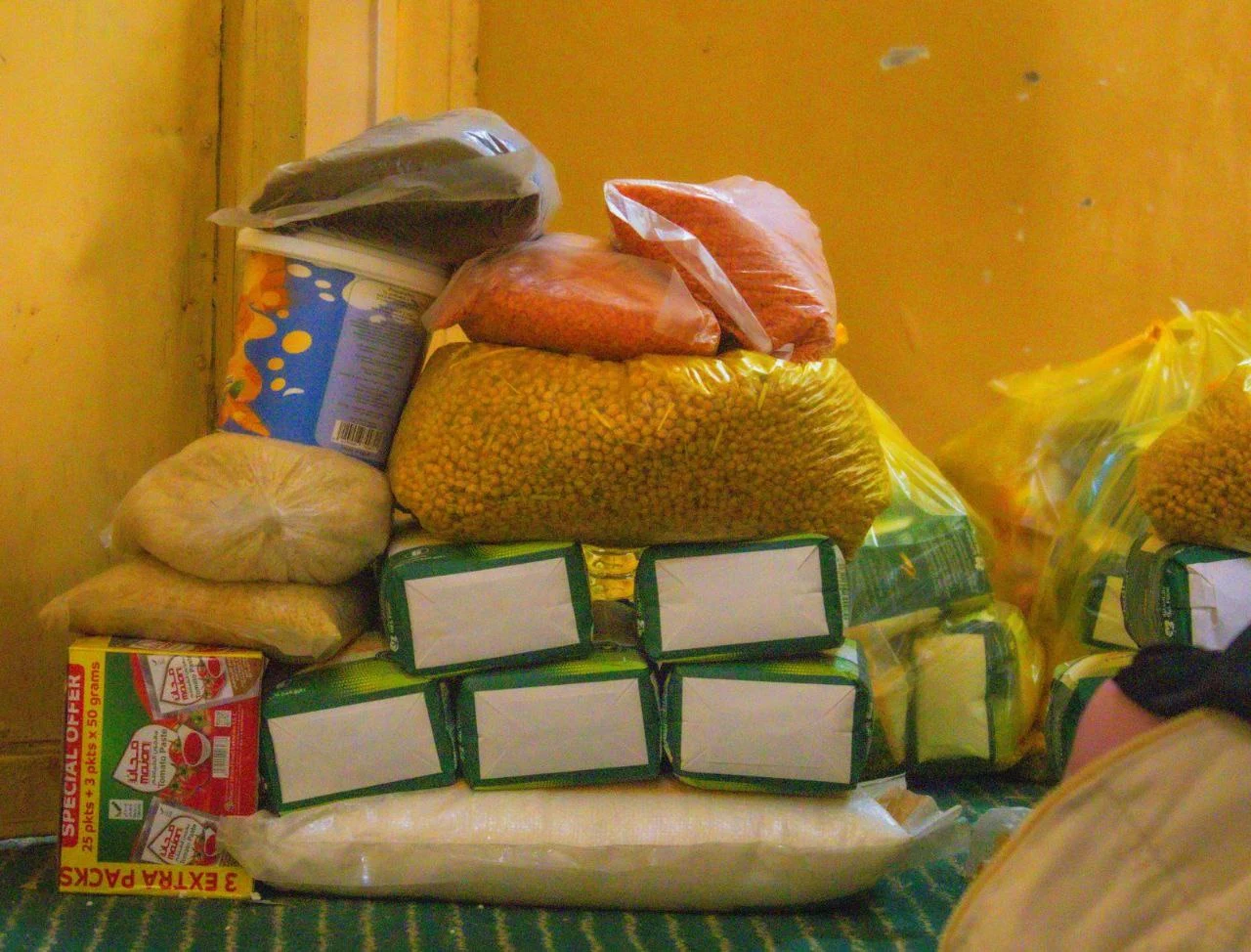
Its current food response has included food baskets and community-kitchen programmes designed to support households that cannot reliably meet their daily food needs. Amel’s 2026 reporting has also documented substantial community-kitchen and Ramadan food assistance.
Those interventions serve a different purpose from agricultural recovery.
They respond to immediate food access.
A displaced household without farmland may need prepared meals.
A family whose income has collapsed may require a food basket.
A farming household, meanwhile, may need seeds or agricultural inputs to preserve its livelihood.
Understanding those differences helps explain why Sudan needs multiple forms of food-security support at the same time.
Humanitarian food assistance is not a substitute for restoring agriculture.
Agricultural recovery is not a substitute for feeding a family that cannot eat today.
Sudan’s Harvest Is Important But It Is Not the End of the Food Crisis
The arrival of harvest season should bring some hope.
Every successful field represents food entering a system that urgently needs it.
Every farmer able to harvest preserves part of Sudan’s agricultural capacity.
And greater local production can help reduce pressure on markets and vulnerable households.
But the evidence available in September 2026 also calls for caution.
Rainfall deficits have affected important producing areas.
Farmers continue to face insecurity and input shortages.
The previous year’s cereal harvest was below average.
Food prices remain exceptionally high.
Millions of Sudanese people are already experiencing severe food insecurity.
And FAO and WFP warn that the risk of Famine could persist in some areas even after harvesting begins.
So the most important question is not simply:
“Will Sudan have a harvest?”
It is:
“Will families be able to turn that harvest into reliable access to food?”
That depends on much more than what grows in the fields.
It depends on whether farmers can keep producing.
Whether roads and markets function.
Whether prices become affordable.
Whether displaced families regain livelihoods.
Whether humanitarian assistance reaches communities still in crisis.
And whether Sudan’s food system can begin recovering after years of disruption.
The 2026 harvest will therefore be an important test.
Not only of Sudan’s agricultural production.
But of whether more food in the country can translate into more food on families’ tables.
Supporting Food Security in Sudan
Amel Foundation supports food-security programmes for vulnerable families affected by hunger, displacement and loss of livelihoods in Sudan.
Learn more about Amel Foundation’s humanitarian programmes at AmelFoundation.org.

Comments are closed