
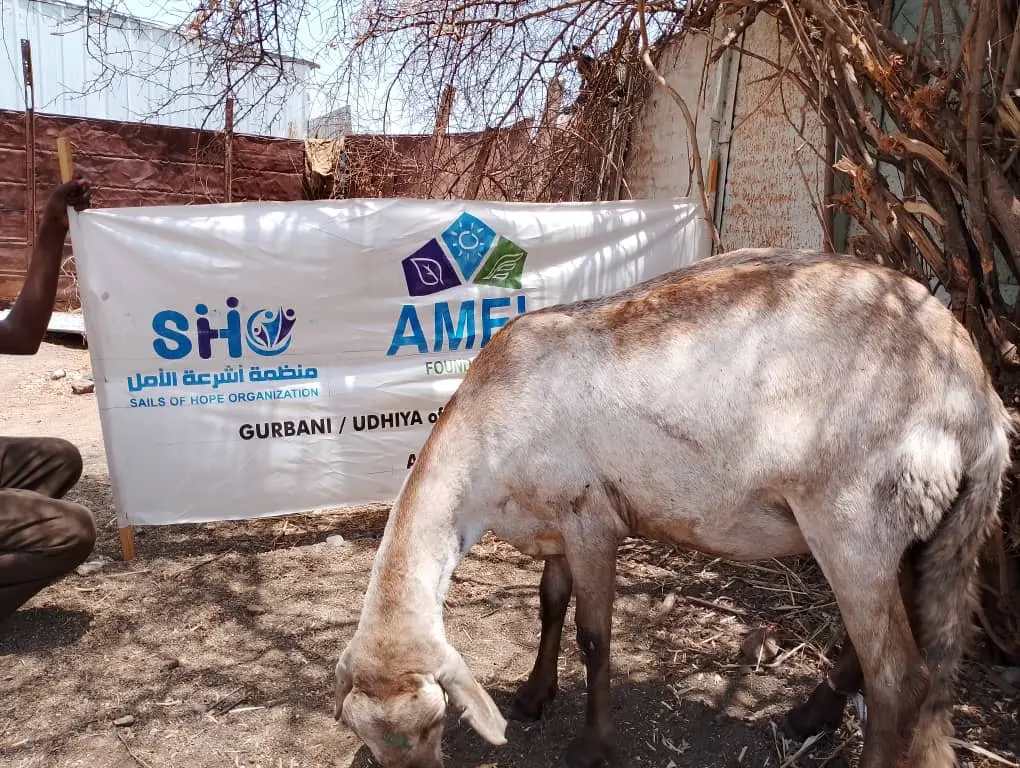
A Nation on the Brink
Sudan is facing one of the most severe humanitarian crises in the world today. More than 14 million people have been displaced, and over 33 million are in urgent need of assistance. According to recent updates from , the country is now experiencing famine-level conditions in multiple regions. What was once a seasonal act of charity has become a critical lifeline for survival.
The global response has not kept pace with the scale of the crisis. Humanitarian funding remains dangerously low, leaving millions without consistent access to food, healthcare, or shelter. In this context, a simple qurbani donation is no longer symbolic. It is a direct intervention that can mean the difference between hunger and nourishment during the most difficult time of the year.
As Eid al-Adha approaches, the urgency increases. This period coincides with what experts call the “lean season,” when food supplies are at their lowest. For families already living on the edge, the arrival of Qurbani meat can provide essential nutrition and a rare moment of relief.
The Qurbani Lifeline: Why This Year Is Different
Fighting Famine with Protein
In 2026, qurbani for Sudan is not just about tradition. It is about addressing severe malnutrition across vulnerable populations. Many children are currently suffering from acute hunger, with reports from highlighting alarming rates of malnutrition and disease outbreaks linked to food scarcity.
Protein-rich meat from an Islamic animal sacrifice donation plays a vital role in stabilizing health conditions. It provides nutrients that are otherwise unavailable in emergency settings, especially in regions where supply chains have completely collapsed. This makes every Eid al-Adha charity contribution a targeted nutritional intervention.
Restoring Dignity Through Shared Meals
Beyond the physical benefits, Qurbani also carries emotional and cultural significance. Families who have lost everything still hold on to traditions that connect them to their identity. Sharing meat during Eid allows them to experience a sense of normalcy, even in overcrowded camps or conflict zones.
This moment of dignity cannot be underestimated. It reinforces community bonds and offers psychological relief during prolonged hardship. Charity during Eid al-Adha becomes not only about feeding people but also about preserving their humanity.
How Qurbani Reaches Those in Need
Navigating Conflict Zones
One of the most common questions donors ask is how their contribution reaches people in active conflict areas. The answer lies in complex humanitarian logistics. Organizations rely on cross-border routes, particularly from Chad into Darfur, to deliver aid where internal roads are blocked.
Reports from confirm that these routes have become essential lifelines. Transporting animals, preparing meat, and distributing it safely requires coordination, speed, and local knowledge. This is why choosing a secure qurbani donation channel is critical.
The Role of Local Responders
Local communities play a central role in distribution. Grassroots networks, often referred to as Emergency Response Rooms, step in where international organizations face access restrictions. These groups understand the terrain, the risks, and the immediate needs of families.
Their involvement ensures that aid reaches even the most isolated areas. It also strengthens trust between donors and beneficiaries, as the support is delivered through familiar and reliable channels.
Displacement and the New Reality of Eid
Life in Overcrowded Camps
For millions of displaced Sudanese, Eid no longer resembles the celebrations of the past. Families now live in temporary shelters, schools, or open spaces with limited access to clean water or healthcare. According to , these conditions increase the risk of disease and malnutrition.
In such environments, food distribution for Eid becomes a critical intervention. A single qurbani donation can provide meals for multiple families, offering relief in places where resources are stretched beyond capacity.
The Collapse of Livestock Markets
The ongoing conflict has severely impacted Sudan’s agricultural and livestock sectors. Many farmers have lost their animals, and markets have become unstable due to inflation and insecurity. As a result, the cost of sourcing animals for Qurbani has risen significantly.
This makes organized donation efforts even more important. When individuals choose to donate qurbani online through trusted organizations, they contribute to a structured system that can overcome these economic barriers and ensure fair distribution.
Humanitarian Barriers That Cannot Be Ignored
Risks Faced by Aid Workers
Delivering humanitarian aid in Sudan comes with significant risks. Healthcare facilities and aid convoys have been targeted, making it difficult to maintain consistent operations. According to WHO data, dozens of attacks on healthcare systems have disrupted essential services.
Despite these dangers, humanitarian workers continue their efforts. Their commitment ensures that support reaches those who need it most, even under extreme conditions. This resilience is a key reason why humanitarian aid donation remains effective despite the challenges.
Administrative and Political Obstacles
In addition to physical risks, bureaucratic delays often slow down aid delivery. Permits, travel restrictions, and administrative requirements create additional barriers. These delays can affect time-sensitive interventions like Qurbani, where meat must be distributed quickly.
Organizations such as the are structured to respond efficiently within these constraints. Their experience allows them to navigate complex systems and prioritize urgent needs.
The Role of Trusted Organizations in Qurbani Donation
Building Systems That Deliver
Effective Qurbani programs require strong infrastructure and local partnerships. Organizations like the have developed systems that ensure transparency, efficiency, and impact. From sourcing animals to final distribution, every step is carefully managed.
This approach builds confidence among donors. It also ensures that contributions are used where they are needed most, without delays or misallocation.
Why Timing Matters
Early donations are crucial in crisis settings. They allow organizations to plan logistics, secure livestock, and coordinate distribution before conditions worsen. Waiting until the last moment can limit the reach and effectiveness of the program.
Choosing to donate qurbani online in advance increases the chances of reaching the most vulnerable communities. It also supports better resource management in a highly unstable environment.
The Deeper Meaning of Qurbani in Crisis
Qurbani has always been about sacrifice, compassion, and sharing. In Sudan today, these values take on a new dimension. The act of giving becomes a form of solidarity with people who are facing unimaginable hardship.
This connection between donor and recipient is powerful. It transforms charity into a shared human experience, where one person’s contribution directly improves another’s life. Support vulnerable communities through Qurbani is not just a recommendation. It is a responsibility.
Conclusion: A Call to Act with Urgency
Sudan remains one of the most overlooked crises in the world, despite its scale and severity. Millions continue to face hunger, displacement, and uncertainty. In this context, qurbani donation is more than a religious obligation. It is a critical intervention that delivers food, dignity, and hope.
The spirit of community, known locally as “Nafir,” continues to sustain many Sudanese families. However, local efforts alone are not enough. Global support is essential to bridge the gap left by limited humanitarian funding.
This Eid al-Adha, the opportunity to make a difference is immediate and tangible. By choosing a secure qurbani donation, donors can ensure that their contribution reaches those who need it most. The impact is real, the need is urgent, and the time to act is now.

Comments are closed