
Updated: September 2026
Across Sudan, millions of people are beginning to return to the places they once called home.
At first glance, that sounds like a sign that the country’s displacement crisis is easing.
In August 2026, the International Organization for Migration recorded approximately 5.15 million returned individuals across 77 localities in nine states. At the same time, around 8.58 million people remained internally displaced across Sudan. About half of those returning were children.
The number of internally displaced people has fallen significantly from its peak.
But a family crossing back into its neighbourhood does not necessarily mean that family has recovered.
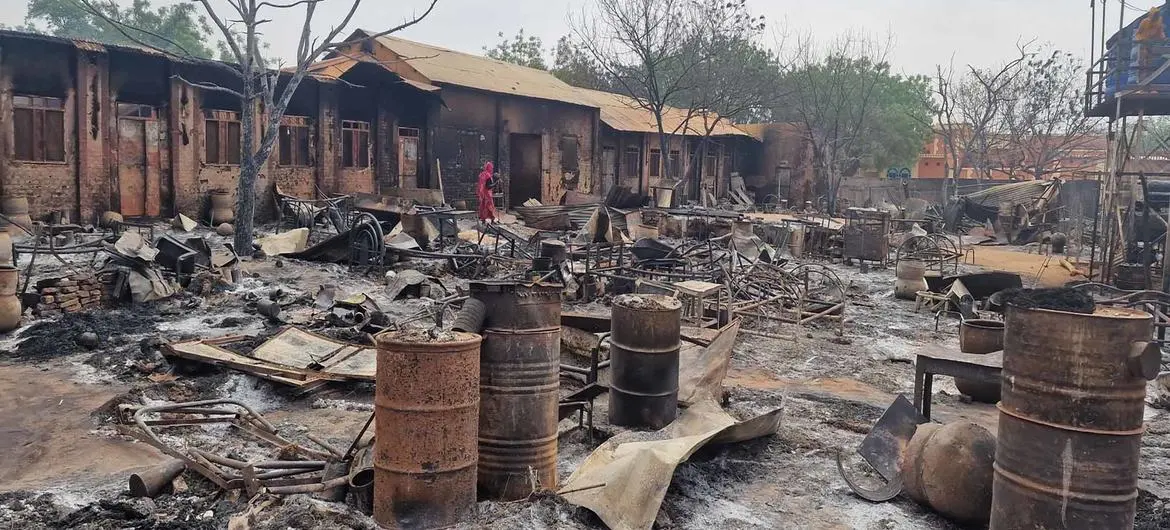
Some return to damaged houses.
Some return to communities without reliable water or electricity.
Schools may still be closed.
Clinics may be partially functioning.
Markets and jobs may not have recovered.
And in areas affected by heavy fighting, unexploded ordnance can make streets, homes and farmland dangerous even after active fighting has moved elsewhere.
That is why humanitarian organizations distinguish between returning home and achieving a durable solution to displacement.
Return is a movement.
Recovery is what must happen afterwards.
Sudan Is Experiencing Large-Scale Return Movements
Sudan’s displacement crisis remains enormous, but population movements have changed significantly during 2026.
By August, IOM estimated that approximately 5,145,165 people had returned to areas of origin.
Around 82 percent had returned after being internally displaced within Sudan, while 18 percent had returned after spending time outside the country.
This is a substantial increase from earlier in the year.
In March 2026, IOM had recorded around 3.99 million returned individuals. By July, that figure had risen to approximately 4.93 million before exceeding five million in August.
The trend matters.
But it needs to be interpreted carefully.
A declining number of internally displaced people does not automatically mean that Sudan’s humanitarian crisis is ending.
Even while millions return, new displacement continues in other parts of the country.
IOM reported that approximately 350,000 people were newly displaced between October 2025 and March 2026, particularly because of insecurity in Al Fasher, North Darfur, Kordofan and Blue Nile.
Sudan can therefore experience return and displacement at the same time.
One family may be going home to Khartoum while another is fleeing violence elsewhere.
Why Are Families Returning?
There is no single reason.
For many families, conditions in their areas of origin have improved enough that returning feels possible.
IOM reported earlier in 2026 that 87 percent of surveyed returning families said improved security was a major reason for going back, while 92 percent intended to remain in their area of return.
But return decisions are often more complicated than simply deciding that an area is completely safe.
People may have spent months or years living with relatives, in temporary shelters or in displacement sites.
Savings may be running out.
Employment opportunities may be limited.
Families may want to check their homes and property.
Children may need to return to school.
Farmers may need to regain access to land.
Some people who left Sudan have also crossed back for family, livelihood or other practical reasons.
IOM recorded more than 766,000 people crossing back into Sudan from neighbouring countries between January 2024 and April 2026. Improved security was one major reason, but livelihood opportunities and family visits were also among the reported motivations.
Returning therefore does not necessarily mean a family believes every problem has been solved.
Sometimes it means that returning appears more manageable than remaining displaced.
Coming Home to a Damaged Home
Housing is one of the clearest examples of why return does not equal recovery.
IOM reported in April that around 60 percent of returning households had gone back to damaged homes, including houses with collapsed roofs, damaged walls or broken windows.
For a family, this changes the meaning of “going home.”
The address may be the same.
The building may not be.
Homes can require roofing materials, doors, windows, electrical repairs or structural reconstruction before they are safe.
Families may return before repairs are possible because they have nowhere else to go.
Others may live in one usable room while rebuilding another part of the house.
The consequences reach beyond shelter.
A damaged home offers less protection from heavy rain, heat, mosquitoes, theft and other risks.
Rebuilding housing therefore becomes one of the first steps in turning return into actual stability.
Basic Services May Not Return With the Family
A functioning neighbourhood is more than a collection of houses.
People need water.
Electricity.
Healthcare.
Schools.
Sanitation.
Transport.
Markets.
In areas heavily affected by conflict, those systems may have been damaged or stopped operating even when residents begin coming back.
UNICEF described families returning to Khartoum in early 2026 as arriving to destroyed homes, damaged schools, broken water systems and severe shortages of basic services.
That creates a difficult reality.
A family may no longer be classified as displaced, but it can still require substantial humanitarian assistance.
Returning home does not suddenly create safe drinking water.
It does not reopen a clinic.
It does not repair a school.
And it does not guarantee that electricity or public transport will resume.
This is why humanitarian support increasingly needs to operate across the boundary between emergency assistance and early recovery.
Water Is One of the First Systems That Must Recover
Water infrastructure shows how important this transition is.
During the first half of 2026, UNICEF reported providing safe-water access to 6.6 million people, including displaced people, returnees and conflict-affected communities.
Part of that response involved emergency measures.
But another part focused on repairing and strengthening water infrastructure.
UNICEF reported constructing or rehabilitating 120 urban water facilities, including facilities in Khartoum, reaching approximately 2.2 million people through these recovery-oriented interventions.
This illustrates what sustainable return requires.
Emergency water trucking may keep families supplied temporarily.
Repairing a treatment plant or damaged pipeline can allow an entire community to function again.
Both can be necessary.
But recovery eventually requires moving from temporary services to functioning local systems.
Returning Children Need Schools, Not Just Houses
Children make up around half of Sudan’s recorded returnee population.
For them, rebuilding normal life means more than returning to the family home.
It also means returning to education.
But many schools have been damaged, closed, occupied or used for other purposes during the conflict.
Teachers may have been displaced.
Furniture and learning materials may have been destroyed or looted.
Some children may return after missing months or years of education.
Others may have moved several times and studied under different systems or not studied at all.
Returning children therefore may need:
● reopened and rehabilitated schools;
● learning materials;
● teachers;
● catch-up or remedial education;
● safe water and sanitation at schools;
● psychosocial support; and
● flexible pathways back into formal learning.
Reopening a school building is an important step.
Helping a child resume learning after prolonged displacement is a much longer process.
Returning Home Can Carry Hidden Physical Dangers
Some dangers are easier to see than others.
A damaged building is visible.
An unexploded weapon buried in a yard may not be.
Explosive ordnance has become a serious concern in areas receiving large numbers of returnees.
UNMAS reported that between January and June 2026, 108 people were killed or injured in 38 explosive-ordnance accidents. Nearly half of the recorded victims were in Khartoum and Al Jazirah two areas receiving significant numbers of returnees.
Children accounted for 55 percent of victims whose ages were recorded.
Explosive hazards can remain in homes, roads, schools, farmland and public spaces after fighting has ended.
In one documented case in Khartoum North, a family returned to discover unexploded ordnance inside their own property.
This is why mine action is part of recovery.
Returning people need information about dangerous objects.
Contaminated areas need assessment.
Explosive items need to be removed.
And roads, schools and homes need to be made safe before normal community life can fully resume.
Families Also Need Ways to Earn a Living Again
Humanitarian assistance can help a family survive displacement.
Recovery eventually requires income.
Conflict can destroy livelihoods in many ways.
Shops close.
Equipment is lost.
Agricultural land becomes inaccessible.
Livestock may be sold, stolen or lost.
Businesses lose customers.
Transport networks break down.
Savings disappear.
A family that returns to the same town may therefore return without the livelihood it previously depended on.
For a farmer, recovery might require seeds, tools and access to land.
For a small business owner, it may require equipment or working capital.
For a wage worker, it may depend on whether employers and businesses have returned.
For young people, vocational training may become increasingly important when old employment opportunities no longer exist.
This is one reason recovery programmes often combine basic services with livelihoods.
People need assistance while systems are rebuilding.
But lasting recovery becomes more possible when households can once again support themselves.
Returnees Can Still Face Food Insecurity
Returning home can also increase immediate household expenses.
Families may need to repair houses, replace furniture, reconnect services and restart businesses at the same time that food prices remain extremely high.
Some returnees have exhausted savings during displacement.
Others return without productive assets.
Earlier IOM household assessments showed that even returnee households could continue facing serious gaps in food and healthcare access after going home.
This is why food assistance may still be necessary in areas experiencing substantial returns.
A family does not stop needing support simply because its displacement status changes.
Humanitarian needs should be measured by actual conditions, not only by whether someone is currently living away from home.
Documents, Property and Legal Support Can Matter Too
Recovery also has a legal side.
Families may return to damaged or occupied property.
Identity documents may have been lost during displacement.
Birth certificates, school records, ownership documents or medical records may be missing.
People returning from another country may need documentation to re-establish services or enrol children in school.
Property disputes can become particularly complicated where neighbourhoods have experienced large-scale displacement.
These issues may not attract the same attention as food or shelter.
But they can determine whether a family is able to rebuild securely.
A repaired house is less useful if ownership is contested.
A functioning school does not fully solve the problem if a child lacks the documents needed to enrol.
Recovery therefore involves rebuilding administrative and legal connections as well as physical infrastructure.
Return Should Be Voluntary, Safe and Dignified
Humanitarian frameworks make an important distinction between physical return and a durable solution.
The Inter-Agency Standing Committee defines a durable solution as a situation in which displaced people no longer face specific protection or assistance needs linked to their displacement and can exercise their rights without discrimination.
Return to the place of origin is one possible durable solution.
Local integration where a person was displaced is another.
Settling elsewhere in the country is a third.
Simply moving back home does not, by itself, complete the process.
For people returning across international borders, the question is even more sensitive.
UNHCR’s June 2026 position states that conditions for broadly safe, dignified and sustainable organized returns to Sudan are generally not yet in place, even though some Sudanese are choosing to return voluntarily on their own.
That distinction matters.
People have the right to make informed choices.
A humanitarian system should support those who choose to return without assuming that everyone should return.
What Would Real Recovery Look Like?
A useful way to judge recovery is to look beyond the number of people who have crossed back into their places of origin.
Can families live safely?
Do they have adequate shelter?
Can they access clean water?
Are clinics functioning?
Can children return to school?
Can adults earn income?
Can people move safely through their communities?
Are explosive hazards being removed?
Can families access documents and resolve property issues?
And do people believe they can remain without being displaced again?
These questions tell us much more than a return statistic alone.
Sudan’s growing number of returnees is significant.
But recovery should ultimately be measured by whether people can rebuild stable lives.
How Amel Foundation’s Work Connects to Recovery
Amel Foundation’s programme areas include food security, water, healthcare, child support, emergency assistance and training and development.
These programmes address different parts of the same recovery challenge.
Food assistance can support families while livelihoods remain disrupted.
Water projects can help restore essential services.
Healthcare support helps communities where medical systems are under pressure.
Training and development can strengthen local capacity and create opportunities beyond immediate emergency aid.
Amel Foundation describes its wider mission as combining urgent humanitarian assistance with longer-term efforts intended to strengthen community resilience.
That combination becomes especially important as Sudan experiences both continuing displacement and growing return movements.
The needs do not suddenly change from “humanitarian” to “development” on the day a family goes home.
There is usually a long period in between.
Going Home Is the Beginning of Recovery, Not the End
More than five million people have now returned to areas of origin in Sudan.
That is one of the most important changes in the country’s displacement picture during 2026.
For many families, returning can represent hope.
It can mean seeing neighbours again.
Reopening a home.
Returning to land.
Sending children back to familiar schools.
Restarting a business.
But return can also mean discovering what the conflict left behind.
Damaged houses.
Broken water systems.
Closed clinics.
Lost livelihoods.
Unsafe streets.
Missing documents.
Explosive hazards.
Sudan’s return movements should therefore be understood neither as proof that the humanitarian crisis is over nor as evidence that recovery is impossible.
They are a new stage of the crisis.
One in which humanitarian assistance, reconstruction and longer-term recovery increasingly overlap.
The most meaningful question is no longer simply:
“How many people have returned?”
It is:
“What do people find when they get home and can they build a life there again?”
That is the difference between return and recovery.
Supporting Communities Across Sudan
Amel Foundation supports humanitarian and development programmes addressing food, water, healthcare, children and community resilience in Sudan.
Learn more about Amel Foundation’s work at AmelFoundation.org.

Comments are closed