
Updated: September 2026
When someone decides to support a humanitarian organization, one question often appears during the donation process:
Where should my money go?
A donor may want to support food assistance.
Another may care most about children.
Someone else may want their contribution used wherever needs are most urgent.
These choices reflect two important approaches to charitable giving: restricted and unrestricted donations.
Both can be useful.
Both can support meaningful humanitarian work.
But they give nonprofit organizations different levels of flexibility in deciding how donated funds can be used.
For donors supporting humanitarian work in places like Sudan, understanding that difference is particularly important because needs can change quickly.
A community requiring food assistance today may experience a disease outbreak next month.
Flooding can suddenly damage a water system.
New displacement can create urgent shelter needs.
A health programme may need additional medicine.
Humanitarian organizations therefore have to balance two important responsibilities:
respecting what donors intend their gifts to support while maintaining enough flexibility to respond to changing needs.
What Is a Restricted Donation?
A restricted donation is a contribution that a donor gives for a specified purpose or subject to another donor-imposed restriction.
For example, a donor might give money specifically for:
- a food-security programme;
- a clean-water project;
- healthcare assistance;
- orphan support;
- an emergency campaign;
- construction of a particular facility; or
- another clearly defined charitable purpose.
The restriction tells the nonprofit that the funds are intended for that purpose rather than for the organization’s general activities.
The National Council of Nonprofits explains that when donors make contributions for a specific purpose, these are generally referred to as restricted gifts, and organizations should take donor intent seriously when accepting and managing them.
In U.S. nonprofit accounting, the more formal terminology is “net assets with donor restrictions” and “net assets without donor restrictions.”
FASB defines a donor-imposed restriction as a stipulation that limits a contributed asset to a use more specific than the nonprofit’s broad charitable purpose.
For most individual donors, however, the simpler terms restricted and unrestricted are easier to understand.
What Is an Unrestricted Donation?
An unrestricted donation is not limited by the donor to a particular programme or project.
Instead, the organization can generally use the contribution to advance its charitable mission according to its priorities, governance processes and applicable requirements.
This does not mean the money can be spent on anything.
A nonprofit still has to operate within its charitable mission, budget, policies, legal obligations and financial controls.
The difference is that the donor has not added an additional purpose restriction.
The National Council of Nonprofits notes that unrestricted contributions can be particularly useful because they allow an organization to direct resources toward the areas of greatest need.
In humanitarian work, that flexibility can be important.
Needs do not always develop according to an annual plan.
A Simple Example
Imagine a humanitarian nonprofit has three programmes:
Food Security
Healthcare
Clean Water
A donor gives $100 and specifically states:
Use this donation for the clean-water programme.
That contribution is intended for the clean-water work.
Now imagine another donor contributes $100 to the organization without specifying a programme.
That contribution provides more flexibility.
If the clean-water programme is already sufficiently funded but a clinic urgently needs medicine, the organization may be able to direct the unrestricted contribution toward healthcare.
Neither donor made the “better” donation.
They simply made different choices.
One donor chose a particular area of work.
The other allowed the organization more discretion to determine where the contribution was needed.
Why Donors Often Prefer Restricted Giving
Restricted donations are easy to understand.
A donor cares about a particular issue and wants to support it directly.
Someone who is deeply concerned about hunger in Sudan may naturally prefer to give to food security.
A donor who has experienced the loss of a parent may feel strongly about supporting vulnerable children.
Another donor may be motivated by seeing a community without clean water.
That connection between personal values and a specific programme can be powerful.
Restricted giving can also make impact easier for donors to visualize.
A campaign may have a clear objective:
- provide food assistance;
- rehabilitate a water source;
- support a medical initiative;
- sponsor vulnerable children.
The donor can understand what type of intervention their contribution is helping finance.
This transparency is valuable.
But restricted funding also creates responsibilities for the organization receiving it.
Organizations Must Respect Donor Intent
Once a nonprofit accepts a restricted gift, the restriction matters.
The National Council of Nonprofits recommends that nonprofits clearly communicate what restrictions they can accept and use written agreements where appropriate, particularly for significant gifts.
This protects both sides.
The donor understands how the funds are intended to be used.
The nonprofit understands what it has agreed to deliver.
Problems can arise when restrictions are vague, unrealistic or narrower than the organization can reasonably manage.
For example, imagine a donor wants a contribution spent on one highly specific item in one small location, but the organization does not operate that type of programme there.
Accepting the gift anyway could create a problem.
In some situations, saying “we cannot responsibly accept that restriction” may be better than taking money the organization cannot use as intended.
Why Unrestricted Donations Matter During Humanitarian Emergencies
Humanitarian crises change quickly.
Sudan is a clear example.
The country’s 2026 emergency includes conflict, displacement, severe food insecurity, disease outbreaks, damaged health infrastructure, water shortages and seasonal flooding.
UNICEF estimates that 33.7 million people require humanitarian assistance in Sudan in 2026, including 17.3 million children.
An organization may therefore begin a month expecting food assistance to be its greatest operational priority.
Then thousands of people may become newly displaced.
A water system may fail.
Flooding may damage shelters.
A health facility may urgently require additional supplies.
Flexible resources allow humanitarian organizations to respond to those changes without waiting for every new need to receive its own dedicated fundraising campaign.
UNICEF’s 2026 Sudan appeal specifically identifies flexible and predictable resources as essential for sustaining and scaling humanitarian interventions as conflict, displacement and access conditions change.
That does not make restricted programme funding unnecessary.
It explains why humanitarian organizations often need a balance of both.
Flexible Funding Can Fill Gaps Between Programmes
Imagine a nonprofit raises enough money to provide the food parcels planned for a particular campaign.
At the same time, transportation costs rise sharply.
Or the organization needs additional monitoring to verify that assistance reached the intended households.
Or another programme experiences an unexpected shortage.
A tightly restricted contribution cannot necessarily be moved to solve those problems.
Flexible funding can help organizations address needs that do not fit neatly inside a campaign headline.
This can include essential operational capacity such as:
- transportation;
- programme staff;
- financial systems;
- monitoring;
- communications;
- safeguarding;
- technology;
- local coordination; and
- emergency response capacity.
These functions may be less visible than a food parcel or water pump.
But programmes depend on them.
“Unrestricted” Does Not Mean “Unaccountable”
This is one of the most important misunderstandings in nonprofit giving.
An unrestricted donation is not a blank cheque for careless spending.
Nonprofits still need:
- budgets;
- accounting;
- governance;
- internal controls;
- financial reporting;
- programme monitoring; and
- compliance with applicable legal requirements.
Unrestricted simply means that the donor has not imposed an additional restriction directing the contribution to a particular purpose.
The organization is still accountable for how it uses charitable resources.
For responsible donors, the question therefore should not only be:
“Is my donation restricted?”
It should also be:
“Do I trust this organization to allocate resources responsibly?”
That brings donor due diligence into the conversation.
What About “Overhead”?
Many donors prefer programme-restricted contributions because they want their entire donation to go “directly to beneficiaries.”
The instinct is understandable.
But humanitarian programmes do not operate without infrastructure.
A medical programme requires more than medicine.
A food distribution requires more than food.
A water project requires more than equipment.
Organizations need staff, accounting systems, transportation, monitoring, technology, safeguarding procedures and other support functions to deliver programmes responsibly.
The National Council of Nonprofits cautions against treating administrative or “overhead” costs as inherently negative, noting that operating a charitable organization itself carries legitimate costs necessary to deliver its mission.
This does not mean donors should ignore efficiency.
Organizations should still manage costs carefully.
But an organization with artificially low administrative spending is not automatically more effective than one investing appropriately in staff, systems and oversight.
Sometimes stronger infrastructure produces better programmes.
Why Too Many Restrictions Can Become a Problem
Consider an organization that receives substantial funding for distributing food but almost no flexible funding.
It may have enough money to purchase food.
But what happens if it lacks funding for the staff needed to manage distribution?
Or transport?
Or financial controls?
Or beneficiary verification?
Or secure data systems?
The organization can become programme-rich but capacity-poor.
This is one reason many nonprofits and grantmakers have increasingly discussed the importance of general operating support.
Candid describes general operating support as unrestricted funding for an organization’s overall mission and notes that nonprofit leaders value it because it provides flexibility to decide how resources can best advance their work.
In its own funding experience, Candid has also argued that fewer restrictions can give organizations greater ability to respond to priorities and changing circumstances.
When Restricted Donations Make Particular Sense
There are still many situations where restricted giving is appropriate.
When a donor strongly cares about one programme
If healthcare is personally important to someone, directing support toward a healthcare programme can create a stronger connection to the organization.
When a campaign has a clearly defined goal
Specific emergency appeals can make it easier for donors to understand the immediate need.
When a major donor and nonprofit agree on a project
Foundations, companies and major donors may work with organizations to fund clearly scoped initiatives with defined budgets and reporting.
When religious giving has specific requirements
Some forms of faith-based charitable giving may have rules regarding eligible recipients or permitted uses.
Organizations accepting these funds need systems capable of respecting those requirements.
Restricted funding is therefore not something organizations should avoid.
The goal is to ensure the restriction is useful, clear and manageable.
When Unrestricted Giving Can Be Especially Valuable
Unrestricted giving may be particularly helpful when:
Needs change rapidly
Conflict, displacement or disease outbreaks can change operational priorities quickly.
Several programmes are under pressure at once
Flexible funds can help close urgent gaps.
The organization needs to maintain essential capacity
Staff, financial controls and operational systems allow programmes to continue functioning.
A new emergency develops unexpectedly
The organization may be able to respond before a dedicated campaign has raised enough money.
Donors trust the organization’s judgement
Some supporters intentionally choose to let leadership allocate their contribution according to current needs.
This type of trust can give humanitarian organizations important room to adapt.
Restricted and Unrestricted Are Not the Only Possibilities
Funding does not always fit into two perfectly separate boxes.
Some contributions are broadly restricted.
A donor might fund:
“humanitarian assistance in Sudan”
rather than one specific water project.
That still gives the organization more flexibility than money restricted to one precise activity.
Large humanitarian agencies sometimes describe funding as:
- earmarked;
- softly earmarked; or
- unearmarked.
UNHCR, for example, notes that flexible and country-level funds may be allocated or reallocated during the year toward prioritized activities, while respecting different levels of donor earmarking.
The terminology varies between organizations.
The principle is the same:
the narrower the donor restriction, the less discretion the organization usually has over where that particular contribution can go.
What Happens If a Restricted Programme Receives More Than It Needs?
This is an important question donors should consider before giving.
The answer depends on the terms attached to the donation and the organization’s policies.
Organizations should ideally explain in advance what happens if:
- a campaign reaches its target;
- circumstances change;
- a project becomes impossible to implement; or
- more money is raised than can reasonably be used for the original purpose.
Donors should read the wording on donation pages and campaign materials carefully.
For substantial restricted gifts, both parties may benefit from a written gift agreement explaining the intended use and what happens if circumstances change.
The National Council of Nonprofits specifically recommends discussing restrictions with the nonprofit before making a gift so that both donor and organization know the restriction can actually be honoured.
Good communication prevents problems later.
How Should Donors Decide?
There is no universal answer.
A donor can begin with five questions.
1. Do I care about one specific programme?
If yes, a programme-specific donation may make sense.
2. Do I trust the organization to identify changing needs?
If yes, flexible support may be appropriate.
3. Does the organization clearly explain its programmes?
Look for information about what it does, where it works and how funds are managed.
4. Does the donation page explain how designated gifts are treated?
Read campaign language rather than assuming every programme selection works exactly the same way.
5. Am I supporting only the visible item or the whole system required to deliver it?
Effective humanitarian programmes require more than supplies.
These questions help donors move from simply asking “Where will my dollar go?” toward understanding “What does responsible delivery require?”
Transparency Matters Regardless of the Type of Donation
Restricted funding does not automatically guarantee good impact.
Unrestricted funding does not automatically guarantee good management.
Transparency matters in both cases.
Donors can look for:
- clearly described programmes;
- financial information;
- organizational leadership;
- evidence of charitable registration;
- reporting on activities and outcomes;
- realistic claims;
- explanations of partnerships; and
- clear ways to contact the organization.
Responsible nonprofits should also avoid suggesting that every dollar has one simple, easily traceable outcome when reality is more complicated.
Humanitarian delivery involves shared systems and operational costs.
Honest reporting should reflect that.
What This Means in Sudan
The need for flexibility is particularly visible in Sudan because humanitarian conditions overlap.
A family may require food assistance today.
Flooding may damage its shelter tomorrow.
A child may become sick.
A water point may stop functioning.
The family may then be displaced again.
UNICEF’s 2026 Sudan response spans healthcare, nutrition, WASH, education and child protection because crisis-affected families often need several forms of assistance simultaneously.
As of June 2026, UNICEF’s Sudan humanitarian appeal still faced a 64 percent funding gap, and the organization specifically called for flexible and predictable support to maintain essential services and adapt to changing needs.
This is a larger humanitarian example of the same challenge smaller organizations face.
Needs do not always develop in the same proportions as donor restrictions.
How This Applies to Amel Foundation
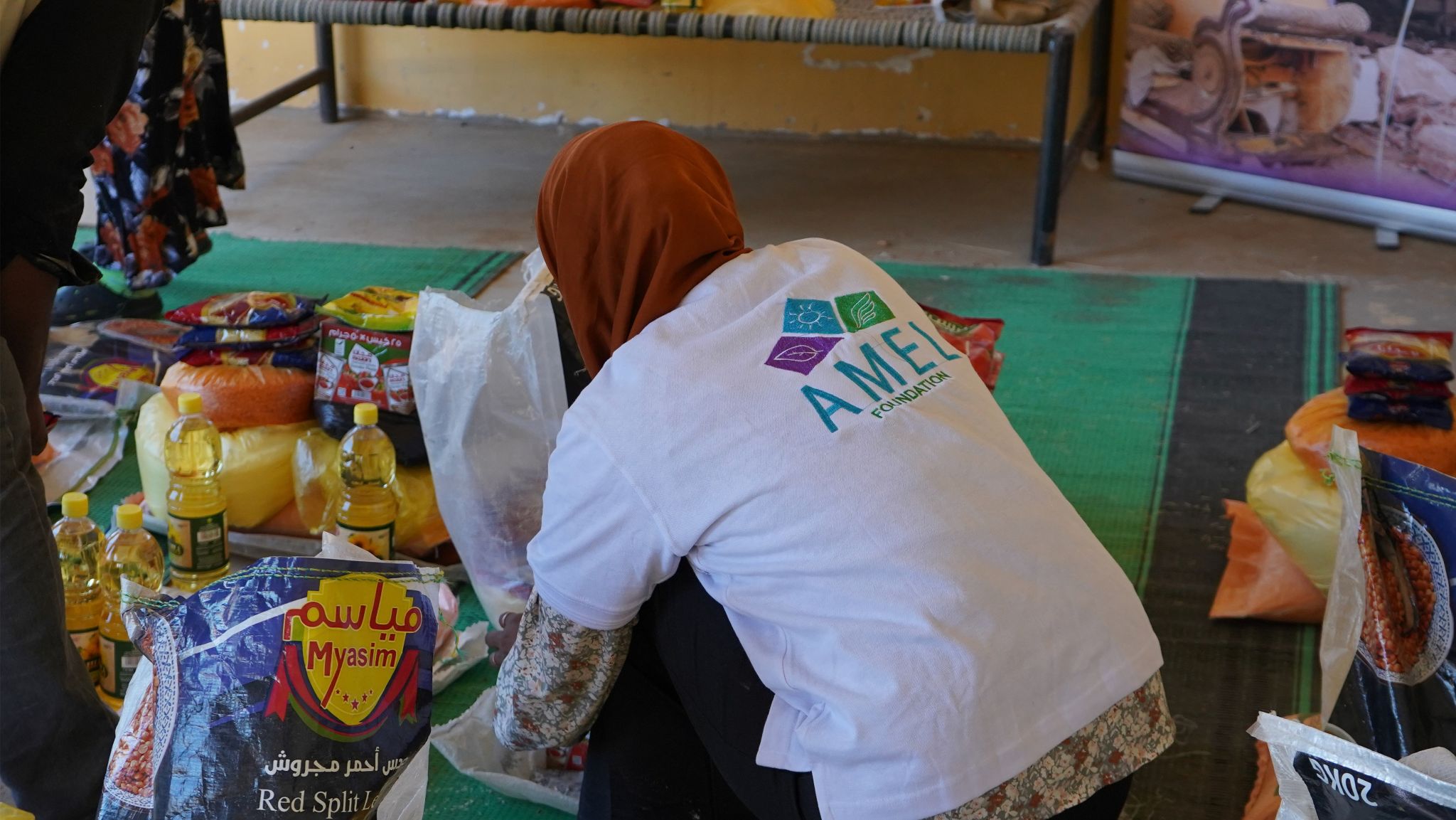
Amel Foundation works across several humanitarian programme areas in Sudan, including food security, water, healthcare, child support and emergency assistance.
Different supporters may naturally feel connected to different parts of that work.
A donor may want to support food assistance.
Another may care about healthcare.
Another may simply want to support Amel’s broader humanitarian mission.
The appropriate treatment of any specific contribution depends on the actual terms under which the gift is accepted.
For that reason, donors should rely on the wording of Amel Foundation’s current donation and campaign pages when choosing where to give.
This article should not be interpreted as establishing Amel Foundation’s accounting or gift-restriction policy.
If a donor wants to make a substantial gift with a very specific purpose, discussing that intention with the organization before contributing is the clearest approach.
The Best Donation Is One Made With Understanding
Donors do not need to become nonprofit accountants before supporting humanitarian work.
But understanding a few basic principles can lead to better giving decisions.
A restricted donation allows a donor to direct support toward an agreed purpose.
An unrestricted donation gives the organization greater flexibility to allocate resources across its mission and current priorities.
Restricted funds can help organizations finance important programmes.
Unrestricted funds can help those programmes remain adaptable and sustainable.
One is not automatically more responsible than the other.
A strong humanitarian organization often needs both.
The most important factors are clarity, trust and accountability.
Donors should understand what they are supporting.
Organizations should communicate honestly about how funds are used.
And both should recognize that humanitarian response depends on more than the most visible item being delivered.
A food parcel needs a distribution system.
A medical programme needs trained staff.
A water project needs maintenance.
A child-support programme needs continuity.
And an organization responding to a rapidly changing crisis needs enough flexibility to keep those systems functioning.
That is why the question is not simply:
“Should I give a restricted or unrestricted donation?”
A better question is:
“What type of support will best help a trustworthy organization carry out the work I want to support?”
Once donors understand that distinction, they can make that decision for themselves.
Learn More About Supporting Amel Foundation
Amel Foundation supports humanitarian programmes addressing food security, healthcare, water, children and other urgent needs affecting communities in Sudan.
Visit AmelFoundation.org to learn about Amel Foundation’s current programmes and donation options.

Comments are closed