
Updated: September 2026
Rain is essential to Sudan.
It supports crops, replenishes water sources and sustains livelihoods across communities that depend heavily on seasonal agriculture.
But when heavy rainfall meets damaged infrastructure, displacement and already fragile public services, the rainy season can create a second humanitarian emergency on top of an existing one.
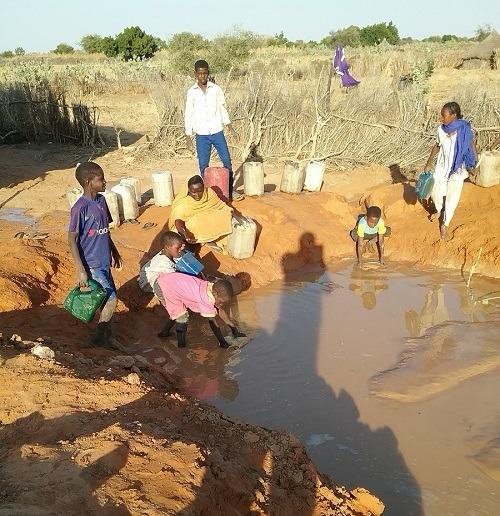
In August 2026, flooding affected communities across Darfur after days of heavy rain. UNICEF documented homes, schools and water facilities being submerged or destroyed. Temporary latrines were washed away, families lost belongings and stagnant water accumulated around homes and displacement areas.
For communities already coping with conflict, hunger and displacement, a flood is therefore rarely just a weather event.
It can damage shelter.
Contaminate water.
Interrupt sanitation.
Block roads.
Increase exposure to disease.
Disrupt healthcare and humanitarian deliveries.
And sometimes force a family that has already fled conflict to move once again.
Understanding Sudan’s rainy season means understanding how these effects connect.
Why Can Heavy Rain Become So Dangerous?
Rainfall alone does not create a humanitarian disaster.
The consequences depend heavily on where people live, the condition of infrastructure and how prepared communities are for flooding.
A family living in a strong building with drainage, reliable sanitation and functioning emergency services faces a very different level of risk from a displaced family living in a temporary shelter.
Across Sudan, conflict has weakened many of the systems that normally help communities cope with severe weather.
Homes have been damaged.
Water systems have been disrupted.
Health facilities have stopped functioning.
Roads and bridges have deteriorated.
Millions of people have been displaced into temporary or overcrowded settlements.
This means that seasonal rainfall is arriving in places where resilience has already been reduced.
WHO describes Sudan’s health emergency as being driven by overlapping conflict, displacement, disease outbreaks, malnutrition and weakened access to essential services. Nearly 40 percent of health facilities were reported non-functional in the organization’s 2026 emergency appeal.
Flooding adds another pressure to that system.
Flooding Can Destroy Shelter in Hours
Housing is one of the first things affected by severe rain.
In parts of Sudan, homes may be constructed from mud, thatch or other materials that become vulnerable when exposed to sustained rainfall and standing water.
UNICEF reported in August that floods in Al Daein, East Darfur, hit vulnerable neighbourhoods particularly hard.
Houses made from thatch and mud collapsed, leaving parents and children exposed, while some older people became trapped inside waterlogged homes.
For displaced families, the danger can be even greater.
Temporary shelters are designed to provide immediate protection.
They may not be designed to withstand repeated storms, strong winds or prolonged flooding.
When a shelter fails, families do not simply lose a roof.
They may lose:
- bedding;
- clothing;
- food;
- medicines;
- identification documents;
- school materials;
- cooking equipment; and
- the few personal belongings they were able to carry during displacement.
A family that escaped conflict with only a small number of possessions may therefore lose them again during a flood.
Flooding Can Cause New Displacement
Sudan’s displacement emergency is usually discussed in relation to conflict.
Natural hazards are another important cause of movement.
IOM estimates that more than 285,000 people were displaced by natural hazards between April 2023 and April 2026, primarily floods and fires. In 2024 alone, nearly 200,000 people were displaced by flooding.
This creates the possibility of secondary displacement.
A family may flee violence and settle in another community.
Months later, flooding damages that settlement.
The family must move again.
Each movement makes recovery more difficult.
Children may lose another period of education.
Families may become separated from new support networks.
People may move farther from healthcare or employment.
Savings can be depleted.
Humanitarian organizations then have to identify where people have moved and reassess their needs.
Displacement caused by weather therefore cannot be separated completely from displacement caused by conflict.
One can make the other worse.
What Happens When Floodwater Reaches Latrines?
One of the most serious consequences of flooding is damage to sanitation systems.
A functioning latrine safely separates human waste from the environment.
Floodwater can break that separation.
In the August floods documented by UNICEF in Darfur, temporary latrines were washed away, leaving communities without adequate sanitation and increasing the risk of water contamination and hygiene-related illnesses.
This matters particularly in densely populated displacement sites.
If sanitation facilities are already limited, losing even part of the available infrastructure can create immediate problems.
People may have fewer safe places to use the toilet.
Waste can enter areas where people walk, cook or collect water.
Floodwater can reach shallow water sources.
Families may have difficulty washing hands because soap or safe water has been lost.
The result is an environment in which faecal contamination becomes more difficult to control.
That is why restoring sanitation after flooding is a public-health priority, not simply an infrastructure project.
Flooding Can Contaminate Drinking Water
Floodwater should never automatically be treated as usable water.
It can carry sewage, waste, chemicals, animal waste and other contaminants.
When wells or water points become flooded, safe water sources may become unsafe.
Families can then face a difficult choice.
Use questionable water.
Travel farther to another source.
Or rely on emergency water assistance.
The risks become especially serious when communities do not have enough fuel to boil water or cannot access treatment products.
UNICEF’s response to flooding in Darfur included rehabilitating damaged water points and providing families with water purification tablets, hygiene kits, jerry cans and soap. Emergency latrines were also constructed.
Those interventions show that restoring water access after a flood involves several steps.
Providing water is important.
But families also need safe containers.
Sanitation.
Hygiene supplies.
Information about safe use.
And, wherever possible, functioning water infrastructure again.
Why Does Flooding Increase the Risk of Diarrhoeal Disease?
Flooding does not automatically cause cholera.
That distinction matters.
Cholera is caused by infection with Vibrio cholerae, usually through contaminated food or water.
But flooding can create conditions that make transmission easier when the bacteria are present.
If latrines overflow or collapse, human waste can contaminate water.
If safe-water systems are damaged, people may rely on unsafe alternatives.
If families become displaced into crowded settlements, sanitation can become more difficult.
UNICEF specifically warned after the August Darfur floods that damaged sanitation increased the risk of water contamination and hygiene-related diseases, including acute watery diarrhoea and cholera.
Sudan is particularly vulnerable because disease outbreaks are already occurring within a severely weakened health environment.
UNICEF’s mid-year reporting noted that a previous cholera outbreak had been declared contained in March 2026, but a new outbreak later emerged in West Kordofan. The same report described inadequate water and sanitation, displacement and reduced access to healthcare as continuing drivers of disease risk.
Flood preparedness in Sudan is therefore also outbreak preparedness.
Stagnant Water Creates a Different Health Risk
Not every disease associated with the rainy season spreads through contaminated drinking water.
Malaria is different.
It is transmitted by infected mosquitoes.
After flooding, standing water can create additional mosquito-breeding sites.
UNICEF highlighted this concern in Darfur in August, warning that stagnant water left behind by flooding was creating breeding grounds for mosquitoes that transmit malaria.
This distinction is important for humanitarian communication.
Cholera risk is closely connected to contaminated water and poor sanitation.
Malaria transmission is connected to mosquitoes.
Flooding can increase conditions associated with both, but through different mechanisms.
The response therefore needs different tools.
Safe drinking water and sanitation help address waterborne-disease risks.
Drainage, mosquito-control measures, appropriate prevention and access to healthcare are important for malaria.
Simply describing every rainy-season disease as a “waterborne disease” would be inaccurate.
Floods Can Cut Communities Off From Healthcare
A clinic can remain physically undamaged and still become inaccessible.
Heavy rain can make roads difficult or impossible to use.
Bridges can be damaged.
Vehicles may be unable to move through flooded areas.
Ambulances may take longer to reach patients.
Humanitarian teams may struggle to deliver medicines.
For someone requiring routine care, this creates delays.
For someone with a medical emergency, the consequences can be much more serious.
Sudan’s health system already faces major access problems.
WHO reported in April that approximately 21 million people lacked adequate access to health services, while 37 percent of health facilities nationwide were non-functional.
The Sudan Health Cluster has also identified the rainy season as a period of heightened public-health risk because existing displacement, outbreaks, supply-chain challenges and reduced healthcare capacity can combine with seasonal hazards.
Flooding therefore does not need to destroy a hospital to affect healthcare.
Sometimes blocking the road is enough.
Pregnant Women Can Face Particular Risks
The effects of flooding are not distributed equally.
Pregnant women may need regular antenatal appointments.
Labour cannot be postponed because a road is flooded.
A complication during childbirth may require urgent referral to a hospital.
Flooding can make these services harder to reach at exactly the moment they are needed.
UNICEF’s August documentation from Darfur included pregnant women among families affected by flooding, highlighting both damaged shelter and increased malaria exposure.
The risk is especially important where maternity services are already limited.
A woman who previously travelled one hour to reach care may face a much longer journey if the normal route becomes unusable.
This is why disaster preparedness must consider not only general evacuation but continuity of essential services such as maternity care, treatment for chronic illness and emergency referrals.
Children Face Multiple Risks at Once
Children can be affected by flooding through several pathways.
They may lose their home.
Their school may close.
They may lose access to safe water.
They may become ill.
Their family may need to relocate.
Food stored at home may be destroyed.
And caregivers may lose income or productive assets.
UNICEF’s August documentation showed schools as well as homes and water facilities being affected by the rains in Darfur.
For a child already living through conflict, another interruption can deepen instability.
Sudan’s education system is already under severe pressure, with more than eight million school-age children out of school according to UNICEF’s mid-year 2026 reporting.
When floods damage classrooms or turn schools into temporary shelters, returning to education can become even more difficult.
This is another example of why humanitarian sectors overlap.
A flood that begins as a weather event can quickly become a shelter, education, health, WASH and protection problem simultaneously.
Flooding Can Damage Food Security Too
Rainfall is necessary for agriculture.
Too much rain in the wrong place or at the wrong time can also damage crops and livelihoods.
Floodwater can affect planted fields.
Stored grain can be spoiled.
Livestock may be lost.
Roads linking farms to markets may become inaccessible.
Small businesses can lose stock.
Families that depend on daily income may lose working days.
This matters because many Sudanese households already have very limited capacity to absorb another economic shock.
When a family is already spending most of its available money on food, replacing a roof or buying new household goods after a flood can force difficult choices.
Repair the home.
Buy medicine.
Replace food.
Pay for transport.
A climate shock can therefore deepen food insecurity even without destroying an entire harvest.
Flooding Also Affects Humanitarian Access
Humanitarian organizations face the same damaged roads and flooding as everyone else.
Supplies cannot help a community if they cannot reach it.
UNICEF’s mid-year reporting warned that seasonal conditions could isolate communities and further complicate humanitarian operations unless alternative access solutions were identified.
This affects:
- food deliveries;
- medical supplies;
- water-treatment materials;
- nutrition services;
- vaccination activities;
- shelter materials; and
- movement of humanitarian personnel.
The rainy season can therefore create a paradox.
Needs may increase at the same moment access becomes more difficult.
Organizations need contingency stocks, alternative routes, local partners and flexible funding before flooding happens not only after roads become impassable.
Emergency Response Begins With Safe Water and Shelter
Immediately after severe flooding, priorities vary according to the community.
But several needs appear repeatedly.
Families may need temporary shelter materials.
Safe drinking water.
Water containers.
Soap and hygiene supplies.
Emergency sanitation.
Healthcare.
Mosquito protection.
Food.
And information about where services are available.
UNICEF’s response in Darfur included tarpaulins for affected families alongside WASH assistance and rehabilitation of damaged water points.
These are emergency interventions.
The longer-term question is how to reduce the same risks before the next rainy season.
Rebuilding Should Also Mean Preparing for the Next Flood
Humanitarian response cannot control how much rain falls.
It can reduce vulnerability to what happens next.
That may involve:
- improving drainage;
- protecting water points from contamination;
- locating latrines more safely;
- strengthening shelters;
- maintaining evacuation routes;
- pre-positioning supplies;
- monitoring disease outbreaks;
- preparing health facilities;
- improving community warning systems; and
- ensuring local responders have resources available.
This is the difference between responding to a hazard and reducing disaster risk.
A flood may be unavoidable.
The scale of human suffering that follows is not always unavoidable.
Preparation can determine whether heavy rain becomes an inconvenience, an emergency or a catastrophe.
Local Organizations Matter During Flood Response
Floods are highly local events.
One neighbourhood may be underwater while another several kilometres away remains accessible.
A road that worked yesterday may become unusable overnight.
A water point may suddenly become contaminated.
Local responders can often identify these changes quickly because they already know the communities.
That does not mean local organizations can replace national infrastructure or large international humanitarian systems.
Major emergencies may require substantial logistics, funding, technical expertise and supplies.
But local knowledge can help determine which households are affected, where people have moved and which routes remain usable.
During rapidly changing conditions, that information is valuable.
It also reinforces why humanitarian preparedness should invest in local capacity before an emergency occurs.
How Amel Foundation’s WASH Work Fits Into the Response
Water, sanitation and hygiene are established areas within Amel Foundation’s humanitarian work in Sudan.
In its first-half 2026 reporting, Amel recorded 3,600 beneficiaries through WASH-related activities, alongside food, health, protection and other forms of assistance.
These programmes are especially relevant during periods when communities face damaged or unreliable water infrastructure.
The role of WASH assistance should be described carefully.
A hygiene kit does not “prevent all disease.”
A water project does not eliminate every health risk.
But safe-water access, appropriate sanitation and hygiene practices reduce important pathways through which disease can spread.
During flooding, those systems become even more important because the separation between clean water, wastewater and living spaces can break down rapidly.
Amel’s broader model of combining water support with food, healthcare and other humanitarian programmes also reflects the interconnected nature of emergencies like flooding.
Families rarely experience only one problem at a time.
Sudan’s Rainy Season Is Both Necessary and Dangerous
Sudan needs rain.
Farmers depend on it.
Pastoral communities depend on water and vegetation supported by it.
Reservoirs and groundwater depend on seasonal replenishment.
The goal is therefore not to describe rainfall itself as a disaster.
The danger comes from the interaction between heavy rain and vulnerability.
A strong home may survive weather that destroys a temporary shelter.
A protected water system may remain safe while an unprotected source becomes contaminated.
A functioning road network may allow emergency services to continue.
A damaged road can isolate an entire community.
Sudan’s current humanitarian crisis has increased vulnerability across all of these areas.
That is why the rainy season deserves attention before a flood reaches the headlines.
Flood Preparedness Is Humanitarian Preparedness
The August 2026 floods in Darfur showed how quickly rain can affect multiple parts of daily life.
Homes were damaged.
Water infrastructure was affected.
Latrines were washed away.
Families lost possessions.
Stagnant water increased mosquito risks.
Humanitarian teams had to restore water points and provide sanitation, purification and shelter assistance.
None of these problems exists independently.
They form a chain.
Flooding damages shelter.
Damaged sanitation increases contamination risk.
Unsafe water increases disease risk.
Stagnant water creates mosquito-breeding conditions.
Damaged roads reduce access to healthcare and aid.
Families may be displaced again.
The strongest humanitarian response therefore does more than react to each problem separately.
It understands the chain and tries to break it as early as possible.
For Sudan, that means protecting water systems, strengthening sanitation, preparing healthcare services, supporting local responders and helping vulnerable families withstand seasonal shocks before another emergency develops.
The rain itself is part of Sudan’s natural cycle.
The humanitarian disaster that can follow does not have to be.
Supporting Water and Humanitarian Programmes in Sudan
Amel Foundation supports water, healthcare, food-security and other humanitarian programmes serving vulnerable communities across Sudan.
Learn more about Amel Foundation’s humanitarian work at AmelFoundation.org.

Comments are closed